

Regulation of extracellular vesicles for protein secretion in Aspergillus nidulans
This study reveals that Aspergillus nidulans boosts extracellular vesicle production when ER-trafficked enzymes are induced, uncovering how fungi remodel their secretome through vesicle-mediated secretion to adapt to changing environments and biofilm formation.

Transcriptomic response to different heme sources in Trypanosoma cruzi epimastigotes
This study uncovers how the Chagas disease parasite adapts to changes in heme, an essential molecule for its survival, providing transcriptional clues to heme metabolism and identifying a previously unreported heme-binding protein in T. cruzi.

Luminal acetylation of microtubules is not essential for Plasmodium berghei and Toxoplasma gondii survival
Acetylation of α-tubulin at lysine 40 is not essential for cytoskeletal stability in Plasmodium berghei or Toxoplasma gondii, suggesting redundancy and plasticity in microtubule regulation in these parasites.

The dual-site agonist for human M2 muscarinic receptors Iper-8-naphtalimide induces mitochondrial dysfunction in Saccharomyces cerevisiae
S. cerevisiae is a model to study human GPCRs. N-8-Iper, active against glioblastoma via M2 receptor, causes mitochondrial damage in yeast by binding Ste2, highlighting evolutionary conservation of GPCRs.

Integrative Omics reveals changes in the cellular landscape of peroxisome-deficient pex3 yeast cells
To uncover the consequences of peroxisome deficiency, we compared Saccharomyces cerevisiae wild-type with pex3 cells, which lack peroxisomes, employing quantitative proteomics and transcriptomics technologies.
Regulation of extracellular vesicles for protein secretion in Aspergillus nidulans
Rebekkah E. Pope1, Patrick Ballmann2, Lisa Whitworth3 and Rolf A. Prade1,*
This study reveals that Aspergillus nidulans boosts extracellular vesicle production when ER-trafficked enzymes are induced, uncovering how fungi remodel their secretome through vesicle-mediated secretion to adapt to changing environments and biofilm formation.
Transcriptomic response to different heme sources in Trypanosoma cruzi epimastigotes
Evelyn Tevere1,a, María G. Mediavilla1,a, Cecilia B. Di Capua1, Marcelo L. Merli1, Carlos Robello2,3, Luisa Berná2,4 and Julia A. Cricco
This study uncovers how the Chagas disease parasite adapts to changes in heme, an essential molecule for its survival, providing transcriptional clues to heme metabolism and identifying a previously unreported heme-binding protein in T. cruzi.
Sir2 regulates selective autophagy in stationary-phase yeast cells
Ji-In Ryua, Juhye Junga, and Jeong-Yoon Kim
This study establishes Sir2 as a previously unrecognized regulator of selective autophagy during the stationary phase and highlight how cells dynamically control organelle degradation.
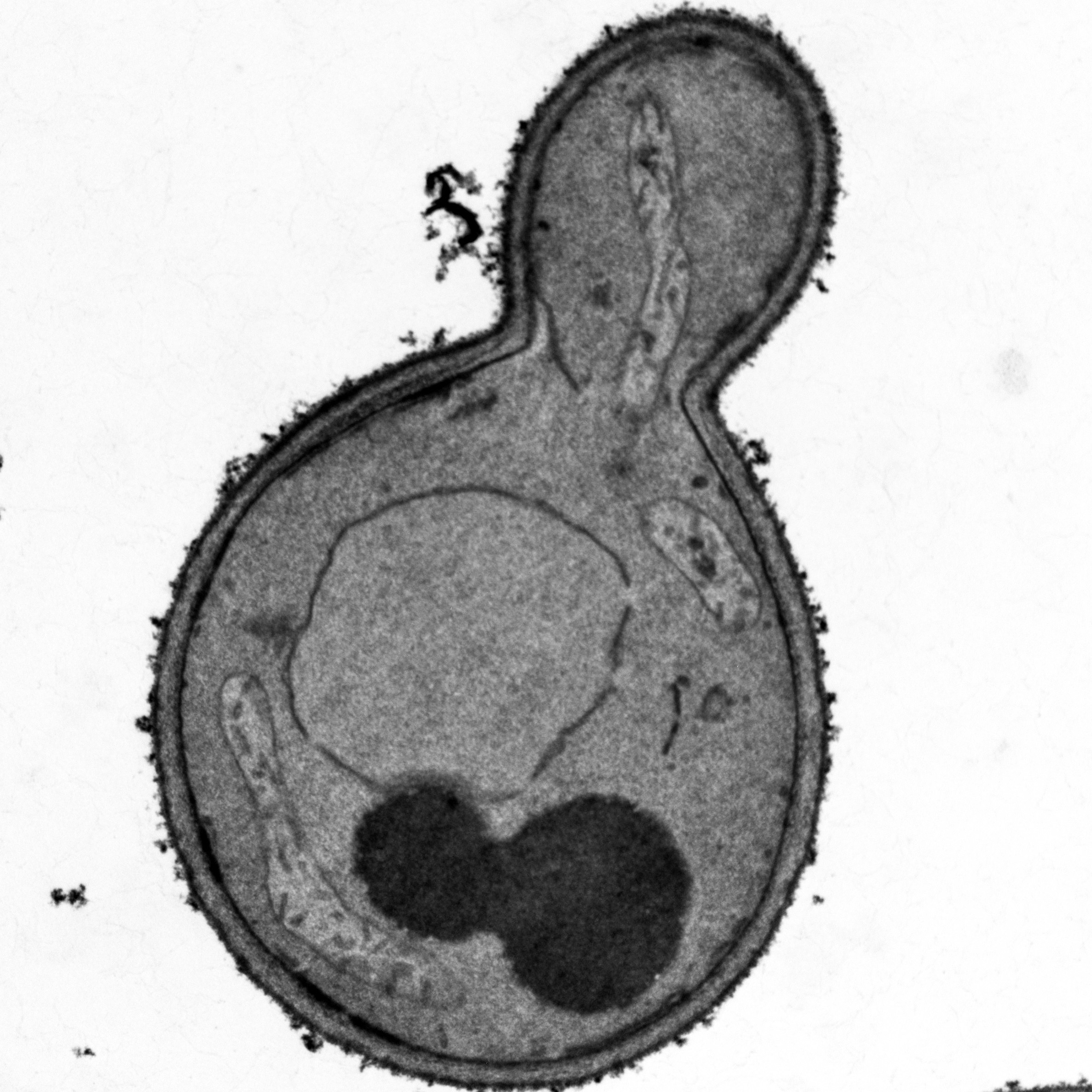
Microwave-assisted preparation of yeast cells for ultrastructural analysis by electron microscopy
Moritz Mayera, Christina Schuga, Stefan Geimer, Till Klecker and Benedikt Westermann
Budding yeast Saccharomyces cerevisiae is widely used as a model organism to study the biogenesis and architecture of organellar membranes, which can be visualized by transmission electron microscopy (TEM).

A complex remodeling of cellular homeostasis distinguishes RSV/SARS-CoV-2 co-infected A549-hACE2 expressing cell lines
Claudia Vanetti1, Irma Saulle1,2, Valentina Artusa1,2, Claudia Moscheni1, Gioia Cappelletti1, Silvia Zecchini1, Sergio Strizzi1, Micaela Garziano1,2, Claudio Fenizia1,2, Antonella Tosoni1, Martina Broggiato1, Pasquale Ogno1, Manuela Nebuloni1, Mario Clerici2,3, Daria Trabattoni1, Fiona Limanaqi1 and Mara Biasin1
Given the common tropism of SARS-CoV-2 and RSV, and the unclear consequences of their mutual influence, we developed an in vitro lung epithelial cell model to study the molecular mechanisms and cellular pathways modulated in viral co-infection.

RidA proteins contribute to fitness of S. enterica and E. coli by reducing 2AA stress and moderating flux to isoleucine biosynthesis
Ronnie L. Fulton, Bryce R. Sawyer and Diana M Downs
This study solidifies the established role of RidA in removing 2AA, while also presenting evidence for a role of RidA in enhancing flux towards isoleucine biosynthesis in E. coli. Overall, these data emphasize that metabolic networks can generate distinct responses to perturbation, even when the individual components are conserved.

Fecal gelatinase does not predict mortality in patients with alcohol-associated hepatitis
Yongqiang Yang1,a, Philipp Hartmann2,3,a and Bernd Schnabl1,4
This study aimed to investigate the significance of fecal gelatinase on clinical outcomes in patients with alcohol-associated hepatitis. In conclusion, in our cohort, fecal gelatinase does not predict mortality and does not indicate higher disease severity in patients with alcohol-associated hepatitis.

Direct detection of stringent alarmones (pp)pGpp using malachite green
Muriel Schicketanz1, Magdalena Petrová2, Dominik Rejman2, Margherita Sosio3, Stefano Donadio3 and Yong Everett Zhang1
In this study, we demonstrate the surprising discovery of a commercially available, low-cost malachite green (MG) detection kit, originally designed for orthophosphate (Pi) detection, for detecting (p)ppGpp and its analogues, especially pGpp

Promoter methylation and increased expression of PD-L1 in patients with active tuberculosis
Yen-Han Tseng1,2, Sheng-Wei Pan1,2,3, Jhong-Ru Huang2,4, Chang-Ching Lee1, Jung-Jyh Hung2,5, Po-Kuei Hsu2,5, Nien-Jung Chen6, Wei-Juin Su2,7, Yuh-Min Chen1,2 and Jia-Yih Feng1,2,8
The PD-1/PD-L1 pathway plays a pivotal role in T cell activity and is involved in the pathophysiology of tuberculosis. Here we show that PD-L1 expression is increased in patients with active tuberculosis and is correlated with treatment outcomes.

Quantification methods of Candida albicans are independent irrespective of fungal morphology
Amanda B Soares1, Maria C de Albuquerque1, Leticia M Rosa1, Marlise I Klein 2, Ana C Paravina1, Paula A Barbugli1, Livia N Dovigo3 and Ewerton G de O Mima1
Our study demonstrated that the quantification methods of C. albicans (cells/mL, CFU/mL, and vPCR) did not agree, regardless of the fungal morphology/growth, even though a significant and strong correlation is observed.

Pathogenic Escherichia coli change the adhesion between neutrophils and endotheliocytes in the experimental bacteremia model
Svetlana N Pleskova1,2,*, Nikolay A Bezrukov1, Sergey Z Bobyk1, Ekaterina N Gorshkova1 and Dimitri V Novikov3
In this work, we have demonstrated that in the model of experimental septicemia there is a disruption of adhesion contacts between neutrophils and endothelial cells, manifested by a decrease in adhesion force and work upon exposure to E. coli.

Arsenite treatment induces Hsp90 aggregates distinct from conventional stress granules in fission yeast
Naofumi Tomimotoa, Teruaki Takasakia and Reiko Sugiura
Given the conserved role of Hsp90 as a molecular chaperone protein, our findings presented in this study may suggest a novel type of arsenite-induced biological condensates, wherein Hsp90 plays a key role in maintaining its integrity.
Transcriptional and genomic mayhem due to aging-induced nucleosome loss in budding yeast
Zheng Hu1, Kaifu Chen2, Wei Li2 and Jessica K. Tyler2
This article comments on work published by Zheng et al. (Genes and Development, 2014), which investigated a loss of histones during replicative aging in budding yeast, which was also accompanied by a significantly-increased frequency of genomic instability including DNA breaks, chromosomal translocations, retrotransposition, and transfer of mitochondrial DNA into the nuclear genome.
The Parkinson’s disease-associated protein α-synuclein disrupts stress signaling – a possible implication for methamphetamine use?
Shaoxiao Wang1 and Stephan N. Witt1,2
This article comments on work published by Wang et al. (PNAS, 2012), which reported that human α-syn, at high expression levels, disrupts stress-activated signal transduction pathways in both yeast and human neuroblastoma cells. Disruption of these signaling pathways ultimately leads to vulnerability to stress and to cell death.
Massive gene swamping among cheese-making Penicillium fungi
Jeanne Ropars1,2, Gabriela Aguileta1,2,3, Damien M. de Vienne4,5 and Tatiana Giraud1,2
This article comments on work published by Cheeseman et al. (Nat Comm, 2014), which indicates that horizontal gene transfer is a crucial mechanism of rapid adaptation, even among eukaryotes.
Genome-wide studies of telomere biology in budding yeast
Yaniv Harari and Martin Kupiec
In the last decade, technical advances have allowed carrying out systematic genome-wide screens for mutants affecting various aspects of telomere biology. In this review we summarize these efforts, and the insights that this Systems Biology approach has produced so far.
Mnemons: encoding memory by protein super-assembly
Fabrice Caudron and Yves Barral
This article comments on work published by Caudron and Barral (Cell, 2013), which proposes that polyQ- and polyN-based elements, termed mnemons, act as cellular memory devices to encode previous environmental conditions.
Intersubunit communications within KaiC hexamers contribute the robust rhythmicity of the cyanobacterial circadian clock
Yohko Kitayama1, Taeko Nishiwaki-Ohkawa1,2 and Takao Kondo1
This article comments on work published by Kitayama et al. (Nat Comm, 2013), which suggests that intersubunit communication precisely synchronizes KaiC subunits to avoid dephasing, and contributes to the robustness of circadian rhythms in cyanobacteria.
Mitochondrial protein import under kinase surveillance
Magdalena Opalińska1 and Chris Meisinger1,2
This article summarizes recent discoveries in the yeast Saccharomyces cerevisiae model system that point towards a vital role of reversible phosphorylation in regulation of mitochondrial protein import.
Building a flagellum in biological outer space
Lewis D. B. Evans, Colin Hughes and Gillian M. Fraser
This article comments on work published by Evans et al. (Nature, 2013), which presents a simple and elegant transit mechanism in which growth is powered by the subunits themselves as they link head-to-tail in a chain that is pulled through the length of the growing structure to the tip. This new mechanism answers an old question and may have resonance in other assembly processes.
Starting with a degron: N-terminal formyl-methionine of nascent bacterial proteins contributes to their proteolytic control
R. Jürgen Dohmen
In this article, the author comments on the study “Formyl-methionine as a degradation signal at the N-termini of bacterial proteins.” by Piatkov et al. (Microbial Cell, 2015), discussing a novel N-terminal degradation signal (N-degron) that targets nascent proteins for degradation in Escherichia coli by a new branch of the bacterial N-end rule pathway, termed the fMet/N-end rule pathway
Elongation factor-P at the crossroads of the host-endosymbiont interface
Andrei Rajkovic1, Anne Witzky2, William Navarre3, Andrew J. Darwin4 and Michael Ibba5
Elongation factor P (EF-P) is an ancient bacterial translational factor that aids the ribosome in polymerizing oligo-prolines. EF-P structurally resembles tRNA and binds in-between the exit and peptidyl sites of the ribosome to accelerate the intrinsically slow reaction of peptidyl-prolyl bond formation. Recent studies have identified in separate organisms, two evolutionarily convergent EF-P post-translational modification systems (EPMS), split predominantly between gammaproteobacteria, and betaproteobacteria. Here, the authors highlight the recent discoveries made regarding EPMSs, with a focus on how these incomplete modification pathways shape or have been shaped by the endosymbiont-host relationship.
Feelin’ it: Differential oxidative stress sensing mediated by Cyclin C
W. Scott Moye-Rowley
Microbial cells that live exposed directly to their environmental milieu are faced with the challenge of adapting to the dynamic stress conditions that will inevitably be encountered. These stress conditions may vary over wide ranges and the most efficient responses would be tuned to produce a proportional buffering change. A mild stress would most efficiently be dealt with by a mild metabolic reprogramming that would prevent serious damage. A more severe environmental challenge would demand a more dramatic cellular compensatory response.
Subverting lysosomal function in Trypanosoma brucei
Sam Alsford
This article discusses Koh et al. (2015) “The lysosomotropic drug LeuLeu-OMe induces lysosome disruption and autophagy-independent cell death in Trypanosoma brucei (Microbial Cell 2(8): 288-298).
Entamoeba histolytica – tumor necrosis factor: a fatal attraction
Serge Ankri
This article comments on the study “In Entamoeba histolytica, a BspA family protein is required for chemotaxis toward tumour necrosis factor” by Silvestre et al. (Microbial Cell, 2015).
Toxoplasma control of host apoptosis: the art of not biting too hard the hand that feeds you
Sébastien Besteiro
Toxoplasma gondii is an obligate intracellular parasite that is able to infect a multitude of different vertebrate hosts and can survive in virtually any nucleated cell. Here, the authors discuss the article “Toxoplasma gondii inhibits cytochrome c-induced caspase activation in its host cell by interference with holo-apoptosome assembly” by Graumann et al. (2015, Microbial Cell).
A safety catch for ornithine decarboxylase degradation
Christof Taxis
Feedback inhibition is a common mechanism to adjust the activity of an enzyme in accordance with the abundance of a product. This article comments on the study “Polyamines directly promote antizyme-mediated degradation of ornithine decarboxylase by the proteasome” by Beenukumar et al. (2015), Microbial Cell.
Fancy a gene? A surprisingly complex evolutionary history of peroxiredoxins.
Alena Zíková1,2, Miroslav Oborník1,2,3 and Julius Lukeš1,2,4
In this comment, the authors discuss the article “Prokaryotic ancestry and gene fusion of a dual localized peroxiredoxin in malaria parasites” (Djuika et al., Microbial Cell 2015).
Quorum protection, growth and survival
Ian G . Macreadie
For the growth of a cell culture, one inoculates not with one cell but with a quorum of cells. This most often a requirement, not just a convenience, and most of us take this for granted without question. Here this observation is re-examined to understand why a quorum may be required to grow cells. The importance of quorums may be widespread in the aspects of microbiology they affect. It is very likely that quorums are connected with and have a large impact on the determination of Minimal Inhibitory Concentrations. It is also possible that low cell density may adversely affect cell survival, however, this is an area where even less is known. The need for a quorum might affect other aspects of microbial cell culture, cell isolation and cell preservation. Effects also extend to mammalian cell culture. Here I seek to review studies that have been documented and speculate on how the information might be utilized in the future.
Microbial Cell
is an open-access, peer-reviewed journal that publishes exceptionally relevant research works that implement the use of unicellular organisms (and multicellular microorganisms) to understand cellular responses to internal and external stimuli and/or human diseases.
you can trust

Can’t find what you’re looking for?
You can browse all our issues and published articles here.
FAQs
Peer-reviewed, open-access research using unicellular organisms (and multicellular microorganisms) to understand cellular responses and human disease.
The journal (founded in 2014) is led by its Editors-in-Chief Frank Madeo, Didac Carmona-Gutierrez, and Guido Kroemer
Microbial Cell has been publishing original scientific literature since 2014, and from the very beginning has been managed by active scientists through an independent Publishing House (Shared science Publishers). The journal was conceived as a platform to acknowledge the importance of unicellular organisms, both as model systems as well as in the biological context of human health and disease.
Ever since, Microbial Cell has very positively developed and strongly grown into a respected journal in the unicellular research community and even beyond. This scientific impact is reflected in the yearly number of citations obtained by articles published in Microbial Cell, as recorded by the Web of Science (Clarivate, formerly Thomson/Reuters):

The scientific impact of Microbial Cell is also mirrored in a series of milestones:
2015: Microbial Cell is included in the Emerging Sources Citation Index (ESCI), a selection of developing journals drafted by Clarivate Analytics based on the candidate’s publishing standards, quality, editorial content, and citation data. Note: As an ESCI-selected journal, Microbial Cell is currently being evaluated in a rigorous and long process to determine an inclusion in the Science Citation Index Expanded (SCIE), which allows the official calculation of Clarivate Analytics’ impact factor.

2016: Microbial Cell is awarded the so-called DOAJ Seal by the selective Directory of Open Access Journals (DOAJ). The DOAJ Seal is an exclusive mark of certification for open access journals granted by DOAJ to journals that adhere to outstanding best practice and achieve an extra high and clear commitment to open access and high publishing standards.

2017: Microbial Cell is included in Pubmed Central (PMC), allowing the archiving of all the journal’s articles in PMC and PubMed.

2019: Microbial Cell is indexed in the prestigious abstract and citation database Scopus after a thorough selection process. This also means that Microbial Cell obtains, for the first time, an official Scopus CiteScore as well as an official journal ranking in the Scimago Journal and Country Ranking.

2022: Microbial Cell’s CiteScore reaches a value of 7.2 for the year 2021, positioning Microbial Cell among the top microbiology journals (previously available CiteScores: 2019: 5.4; 2020: 5.1).

2022: Microbial Cell is indexed in the highly selective Science Citation Index Expanded™, which covers approx. 9,500 of the world’s most impactful journals across 178 scientific disciplines. In their journal selection and curation process, Clarivate´s editors apply 24 ‘quality’ criteria and four ‘impact’ criteria to select the most influential journals in their respective fields. This selection is also a pre-requisite for inclusion in the JCR, which features the impact factor.

2022: Microbial Cell is listed in the Journal Citation Reports™ (JCR), and obtains its first official Journal Impact Factor™ (JIF) for the year 2021: 5.316.Check Article Types and Manuscript Preparation guidelines. Submit online via Scholastica.