
Research Articles

Luminal acetylation of microtubules is not essential for Plasmodium berghei and Toxoplasma gondii survival
Thrishla Kumar1,a, Katharina Röver2,a, Johannes F. Stortz3,a, Annika M. Binder2,a, Benjamin Spreng2, Madlen Konert2, Markus Meissner1, Friedrich Frischknecht2,4 and Elena Jimenez-Ruiz1,*
Acetylation of α-tubulin at lysine 40 is not essential for cytoskeletal stability in Plasmodium berghei or Toxoplasma gondii, suggesting redundancy and plasticity in microtubule regulation in these parasites.

The dual-site agonist for human M2 muscarinic receptors Iper-8-naphtalimide induces mitochondrial dysfunction in Saccharomyces cerevisiae
Angela Cirigliano1,a, Antonia Amelina2,a, Elena Passarini2, Alessandra Ricelli1, Nicole Balasco1, Mattia Mori3, Bruno Botta4, Maria Egle De Stefano2,5, Claudio Papotto6, Claudia Guerriero2, Ada Maria Tata2,5 and Teresa Rinaldi2,*
S. cerevisiae is a model to study human GPCRs. N-8-Iper, active against glioblastoma via M2 receptor, causes mitochondrial damage in yeast by binding Ste2, highlighting evolutionary conservation of GPCRs.

The core genetic drivers of chronological aging in yeast are universal regulators of longevity
Erika Cruz-Bonilla1, Sergio E. Campos2, Soledad Funes3, Cei Abreu-Goodger4 and Alexander DeLuna1,2,*
This study provides an integrated view of the core genetic landscape underlying aging in yeast, highlighting the value of the chronological lifespan paradigm for investigating conserved mechanisms of aging.

Organelle activity organized by the endoplasmic reticulum-mitochondria encounter structure –ERMES– is essential for Podospora anserina development
Melisa Álvarez-Sánchez1, Matías Ramírez-Noguez1, Beatriz Aguirre-López1 and Leonardo Peraza-Reyes1
This study shows that the regulation of the activity of multiple organelles by the ERMES (Endoplasmic Reticulum-Mitochondria Encounter Structure) tethering complex is essential for fungal growth and sexual development.
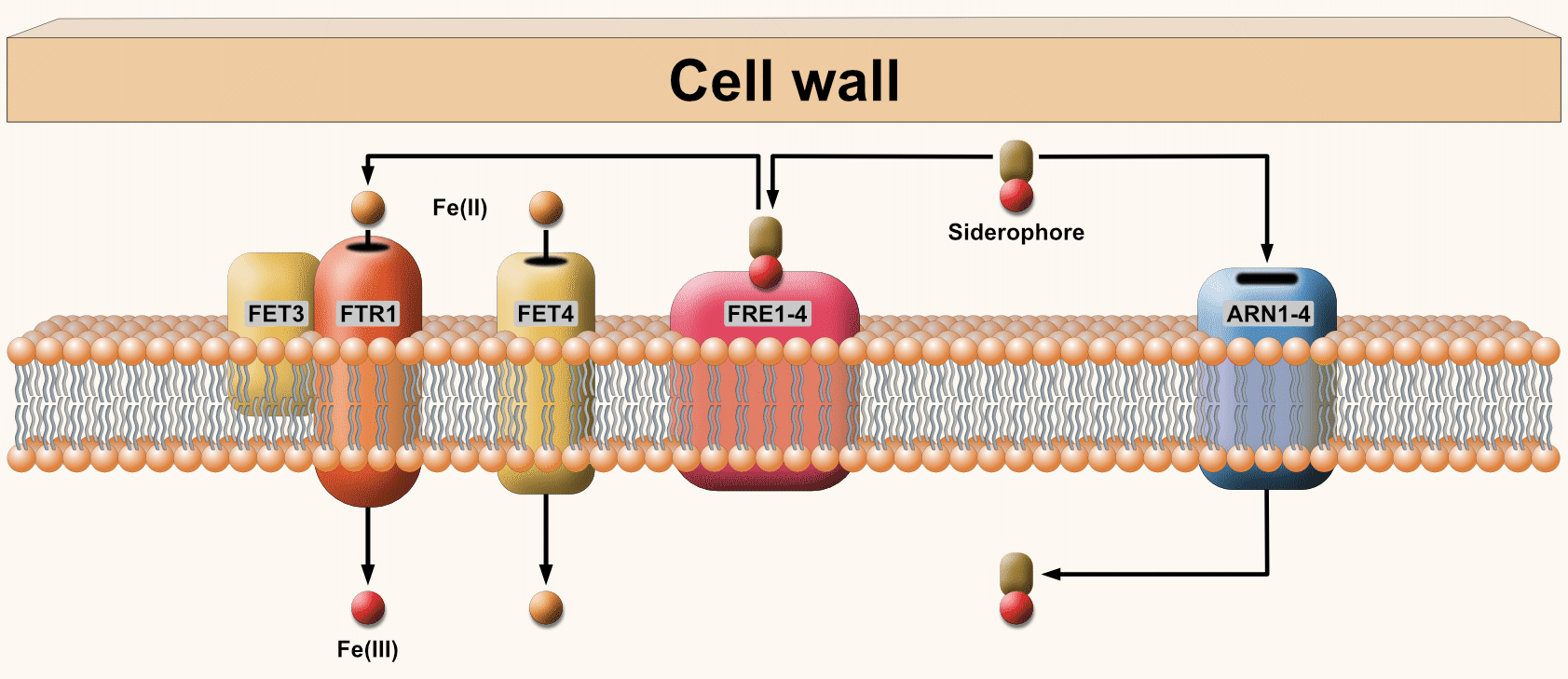
Role of the putative sit1 gene in normal germination of spores and virulence of the Mucor lusitanicus
Bernadett Vágó1,2, Kitti Bauer1,2, Naomi Varghese1,2, Sándor Kiss-Vetráb1,2, Sándor Kocsubé1,2, Mónika Varga1,2, András Szekeres1,2, Csaba Vágvölgyi1,2, Tamás Papp1,2,3,# and Gábor Nagy1,2,3,#
Mucormycosis is a life-threatening infection caused by certain members of the fungal order Mucorales, with increased incidence in recent years. Individuals with untreated diabetes mellitus, and patients treated with deferoxamine are particularly susceptible to this infection.

Tumor microenvironment signatures enhances lung adenocarcinoma prognosis prediction: Implication of intratumoral microbiota
Fei Zhao1,#, Lei Wang2,3,4,#, Dongjie Du5, Heaven Zhao6,7, Geng Tian6,7, Yufeng Li2,3,8, Yankun Liu2,8,9, Zhiwu Wang2,3,10, Dasheng Liu11, Jingwu Li2,3,12, Lei Ji6,7 and Hong Zhao1
The interaction between intratumoral microbiome and the tumor microenvironment (TME) has furthered our understanding of tumor ecology. Yet, the implications of their interaction for lung cancer management remain unclear.

Persistence phenotype of adherent-invasive Escherichia coli in response to ciprofloxacin, revealing high-persistence strains
Valeria Pérez-Villalobos1, Roberto Vidal2, Marcela A. Hermoso3,4 and Paula Bustamante1
We investigated the roles of the resident antibiotic resistance plasmid, the stress response protein HtrA, and macrophage-induced persister formation. Our results revealed broad variability in persister cell formation among AIEC strains.

Knocking out histidine ammonia-lyase by using CRISPR-Cas9 abolishes histidine role in the bioenergetics and the life cycle of Trypanosoma cruzi
Janaína de Freitas Nascimento1, María Julia Barisón1, Gabriela Torres Montanaro1, Letícia Marchese1, Rodolpho Ornitz Oliveira Souza1, Letícia Sophia Silva2, Alessandra Aparecida Guarnieri2 and Ariel Mariano Silber1
Recent studies have highlighted the importance of this pathway in ATP production, redox balance, and the maintenance of cellular homeostasis in T. cruzi. In this work, we focus on the first step of the histidine degradation pathway, which is performed by the enzyme histidine ammonia lyase. Here we determined the kinetic and biochemical parameters of the T. cruzi histidine ammonia-lyase.
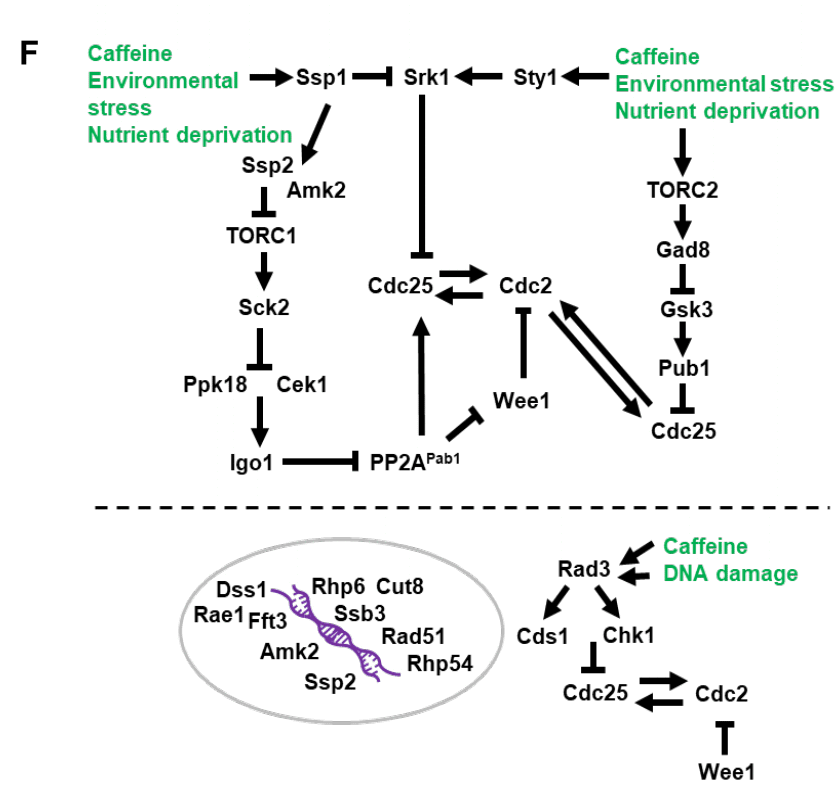
Dissecting the cell cycle regulation, DNA damage sensitivity and lifespan effects of caffeine in fission yeast
John-Patrick Alao1, Juhi Kumar1, Despina Stamataki2 and Charalampos Rallis1
Our findings show that caffeine accelerates mitotic division and is beneficial for CLS through AMPK. Direct pharmacological targeting of AMPK may serve towards healthspan and lifespan benefits beyond yeasts, given the highly conserved nature of this key regulatory cellular energy sensor.
The MAPKKKs Ste11 and Bck1 jointly transduce the high oxidative stress signal through the cell wall integrity MAP kinase pathway
September 6, 2015
Oxidative stress stimulates the Rho1 GTPase, which in turn induces the cell wall integrity (CWI) MAP kinase cascade. CWI activation promotes stress-responsive gene expression through activation of transcription factors (Rlm1, SBF) and nuclear release and subsequent destruction of the repressor cyclin C. This study reports that, in response to high hydrogen peroxide exposure, or in the presence of constitutively active Rho1, cyclin C still translocates to the cytoplasm and is degraded in cells lacking Bck1, the MAPKKK of the CWI pathway.
Formyl-methionine as a degradation signal at the N-termini of bacterial proteins
September 6, 2015
Varshavsky and colleagues solve a long-standing mystery in proteolysis! In bacteria, all nascent proteins bear the pretranslationally formed N-terminal formyl-methionine (fMet) residue. The fMet residue is cotranslationally deformylated by a ribosome-associated deformylase. The formylation of N-terminal Met in bacterial proteins is not strictly essential for either translation or cell viability. Moreover, protein synthesis by the cytosolic ribosomes of eukaryotes does not involve the formylation of N-terminal Met. What, then, is the main biological function of this metabolically costly, transient, and not strictly essential modification of N‑terminal Met, and why has Met formylation not been eliminated during bacterial evolution? One possibility is that the similarity of the formyl and acetyl groups, their identical locations in...
A single mutation in the 15S rRNA gene confers non sense suppressor activity and interacts with mRF1 the release factor in yeast mitochondria
August 2, 2015
This article presents the nucleotide sequence of the mim3-1 mitochondrial ribosomal suppressor, acting on ochre mitochondrial mutations and one frameshift mutation in Saccharomyces cerevisiae. A hypothetical mechanism of suppression by "ribosome shifting" is also discussed in view of the nature of mutations suppressed and not suppressed.
The lysosomotropic drug LeuLeu-OMe induces lysosome disruption and autophagy-independent cell death in Trypanosoma brucei
July 30, 2015
Trypanosoma brucei is a blood-borne, protozoan parasite that causes African sleeping sickness in humans and nagana in animals. The current chemotherapy relies on only a handful of drugs that display undesirable toxicity, poor efficacy and drug-resistance. In this study, we explored the use of lysosomotropic drugs to induce bloodstream form T. brucei cell death via lysosome destabilization. We measured drug concentrations that inhibit cell proliferation by 50% (IC50) for several compounds, chosen based on their lysosomotropic effects previously reported in Plasmodium falciparum. The lysosomal effects and cell death induced by L-leucyl-L-leucyl methyl ester (LeuLeu-OMe) were further analyzed by flow cytometry and immunofluorescence analyses of different lysosomal markers...
In Entamoeba histolytica, a BspA family protein is required for chemotaxis toward tumour necrosis factor
July 6, 2015
Background: Entamoeba histolytica cell migration is essential for the development of human amoebiasis (an infectious disease characterized by tissue invasion and destruction). The tissue inflammation associated with tumour necrosis factor (TNF) secretion by host cells is a well-documented feature of amoebiasis. Tumour necrosis factor is a chemoattractant for E. histolytica, and the parasite may have a TNF receptor at its cell surface. Methods: confocal microscopy, RNA Sequencing, bioinformatics, RNA antisense techniques and histological analysis of human colon explants were used to characterize the interplay between TNF and E. histolytica. Results: an antibody against human TNF receptor 1 (TNFR1) stained the E. histolytica trophozoite...
Polyamines directly promote antizyme-mediated degradation of ornithine decarboxylase by the proteasome
May 20, 2015
Ornithine decarboxylase (ODC), a ubiquitin-independent substrate of the proteasome, is a homodimeric protein with a rate-limiting function in polyamine biosynthesis. Polyamines regulate ODC levels by a feedback mechanism mediated by ODC antizyme (OAZ). Higher cellular polyamine levels trigger the synthesis of OAZ and also inhibit its ubiquitin-dependent proteasomal degradation. OAZ binds ODC monomers and targets them to the proteasome. Here, we report that polyamines, aside from their role in the control of OAZ synthesis and stability, directly enhance OAZ-mediated ODC degradation by the proteasome. Using a stable mutant of OAZ, we show that polyamines promote ODC degradation in Saccharomyces cerevisiae cells even when OAZ levels are not changed. Furthermore, polyamines stimulated the in vitro degradation of ODC by the...
Toxoplasma gondii inhibits cytochrome c-induced caspase activation in its host cell by interference with holo-apoptosome assembly
May 4, 2015
Inhibition of programmed cell death pathways of mammalian cells often facilitates the sustained survival of intracellular microorganisms. The apicomplexan parasite Toxoplasma gondii is a master regulator of host cell apoptotic pathways. Here, we have characterized a novel anti-apoptotic activity of T. gondii. Using a cell-free cytosolic extract model, we show that T. gondii interferes with the activities of caspase 9 and caspase 3/7 which have been induced by exogenous cytochrome c and dATP. Proteolytic cleavage of caspases 9 and 3 is also diminished suggesting inhibition of holo-apoptosome function. Parasite infection of Jurkat T cells and subsequent triggering of apoptosome formation by exogenous cytochrome c in vitro and in vivo indicated that...
Modeling human Coenzyme A synthase mutation in yeast reveals altered mitochondrial function, lipid content and iron metabolism
April 6, 2015
Mutations in nuclear genes associated with defective coenzyme A biosynthesis have been identified as responsible for some forms of neurodegeneration with brain iron accumulation (NBIA), namely PKAN and CoPAN. Yeast expressing a pathogenic mutation exhibited a temperature-sensitive growth defect in the absence of pantothenate and a reduced CoA content. Additional characterization revealed decreased oxygen consumption, reduced activities of mitochondrial respiratory complexes, higher iron content, increased sensitivity to oxidative stress and reduced amount of lipid droplets, thus partially recapitulating the phenotypes found in patients and establishing yeast as a potential model to clarify the pathogenesis underlying PKAN and CoPAN diseases.
Prokaryotic ancestry and gene fusion of a dual localized peroxiredoxin in malaria parasites
January 4, 2015
Horizontal gene transfer has emerged as a crucial driving force for the evolution of eukaryotes. This also includes Plasmodium falciparum and related economically and clinically relevant apicomplexan parasites, whose rather small genomes have been shaped not only by natural selection in different host populations but also by horizontal gene transfer following endosymbiosis. However, there is rather little reliable data on horizontal gene transfer between animal hosts or bacteria and apicomplexan parasites. Here we show that apicomplexan homologues of peroxiredoxin 5 (Prx5) have a prokaryotic ancestry and therefore represent a special subclass of Prx5 isoforms in eukaryotes. Using two different immunobiochemical approaches, we found that...