
Research, Research Reports

Transcriptomic response to different heme sources in Trypanosoma cruzi epimastigotes
Evelyn Tevere1,a, María G. Mediavilla1,a, Cecilia B. Di Capua1, Marcelo L. Merli1, Carlos Robello2,3, Luisa Berná2,4 and Julia A. Cricco
This study uncovers how the Chagas disease parasite adapts to changes in heme, an essential molecule for its survival, providing transcriptional clues to heme metabolism and identifying a previously unreported heme-binding protein in T. cruzi.
Sir2 regulates selective autophagy in stationary-phase yeast cells
Ji-In Ryua, Juhye Junga, and Jeong-Yoon Kim
This study establishes Sir2 as a previously unrecognized regulator of selective autophagy during the stationary phase and highlight how cells dynamically control organelle degradation.

Luminal acetylation of microtubules is not essential for Plasmodium berghei and Toxoplasma gondii survival
Thrishla Kumar1,a, Katharina Röver2,a, Johannes F. Stortz3,a, Annika M. Binder2,a, Benjamin Spreng2, Madlen Konert2, Markus Meissner1, Friedrich Frischknecht2,4 and Elena Jimenez-Ruiz1,*
Acetylation of α-tubulin at lysine 40 is not essential for cytoskeletal stability in Plasmodium berghei or Toxoplasma gondii, suggesting redundancy and plasticity in microtubule regulation in these parasites.

The dual-site agonist for human M2 muscarinic receptors Iper-8-naphtalimide induces mitochondrial dysfunction in Saccharomyces cerevisiae
Angela Cirigliano1,a, Antonia Amelina2,a, Elena Passarini2, Alessandra Ricelli1, Nicole Balasco1, Mattia Mori3, Bruno Botta4, Maria Egle De Stefano2,5, Claudio Papotto6, Claudia Guerriero2, Ada Maria Tata2,5 and Teresa Rinaldi2,*
S. cerevisiae is a model to study human GPCRs. N-8-Iper, active against glioblastoma via M2 receptor, causes mitochondrial damage in yeast by binding Ste2, highlighting evolutionary conservation of GPCRs.

The core genetic drivers of chronological aging in yeast are universal regulators of longevity
Erika Cruz-Bonilla1, Sergio E. Campos2, Soledad Funes3, Cei Abreu-Goodger4 and Alexander DeLuna1,2,*
This study provides an integrated view of the core genetic landscape underlying aging in yeast, highlighting the value of the chronological lifespan paradigm for investigating conserved mechanisms of aging.

Organelle activity organized by the endoplasmic reticulum-mitochondria encounter structure –ERMES– is essential for Podospora anserina development
Melisa Álvarez-Sánchez1, Matías Ramírez-Noguez1, Beatriz Aguirre-López1 and Leonardo Peraza-Reyes1
This study shows that the regulation of the activity of multiple organelles by the ERMES (Endoplasmic Reticulum-Mitochondria Encounter Structure) tethering complex is essential for fungal growth and sexual development.
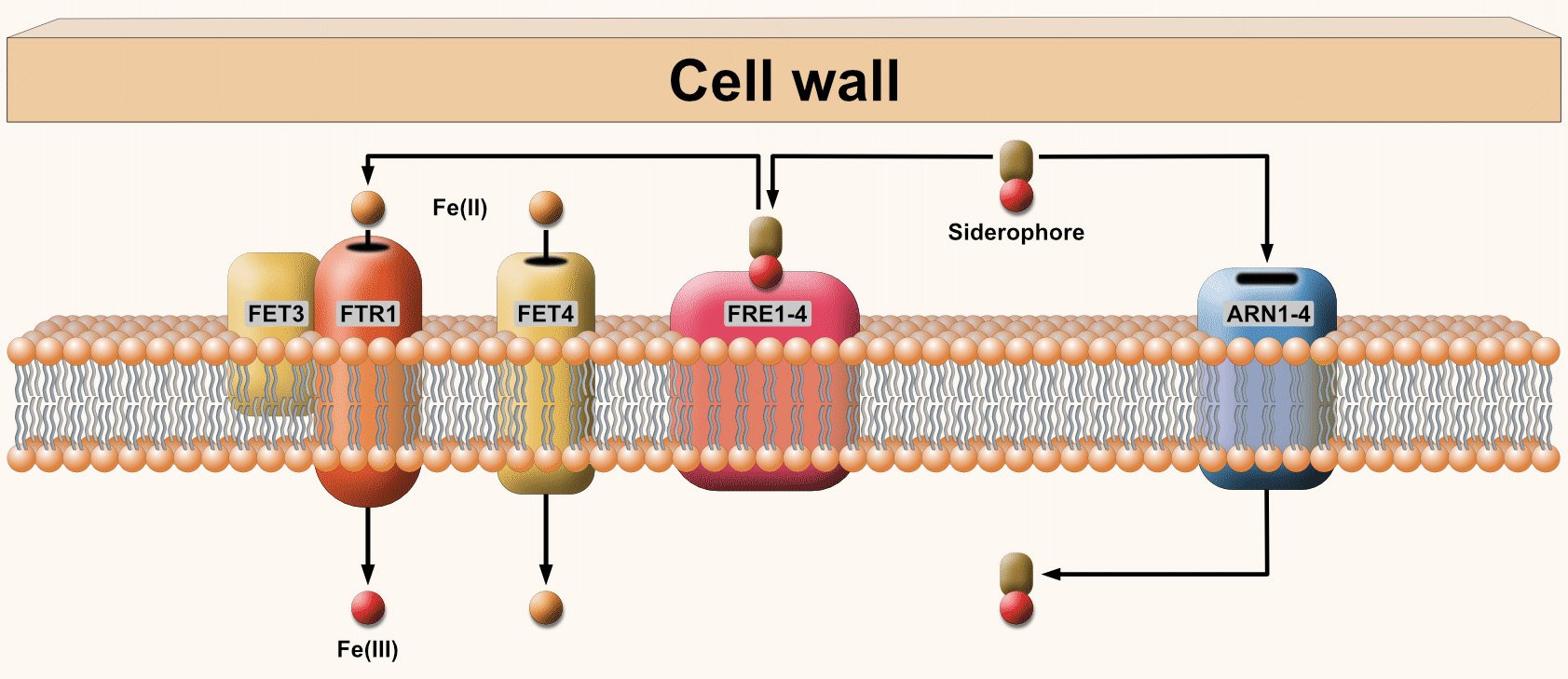
Role of the putative sit1 gene in normal germination of spores and virulence of the Mucor lusitanicus
Bernadett Vágó1,2, Kitti Bauer1,2, Naomi Varghese1,2, Sándor Kiss-Vetráb1,2, Sándor Kocsubé1,2, Mónika Varga1,2, András Szekeres1,2, Csaba Vágvölgyi1,2, Tamás Papp1,2,3,# and Gábor Nagy1,2,3,#
Mucormycosis is a life-threatening infection caused by certain members of the fungal order Mucorales, with increased incidence in recent years. Individuals with untreated diabetes mellitus, and patients treated with deferoxamine are particularly susceptible to this infection.

Tumor microenvironment signatures enhances lung adenocarcinoma prognosis prediction: Implication of intratumoral microbiota
Fei Zhao1,#, Lei Wang2,3,4,#, Dongjie Du5, Heaven Zhao6,7, Geng Tian6,7, Yufeng Li2,3,8, Yankun Liu2,8,9, Zhiwu Wang2,3,10, Dasheng Liu11, Jingwu Li2,3,12, Lei Ji6,7 and Hong Zhao1
The interaction between intratumoral microbiome and the tumor microenvironment (TME) has furthered our understanding of tumor ecology. Yet, the implications of their interaction for lung cancer management remain unclear.

Persistence phenotype of adherent-invasive Escherichia coli in response to ciprofloxacin, revealing high-persistence strains
Valeria Pérez-Villalobos1, Roberto Vidal2, Marcela A. Hermoso3,4 and Paula Bustamante1
We investigated the roles of the resident antibiotic resistance plasmid, the stress response protein HtrA, and macrophage-induced persister formation. Our results revealed broad variability in persister cell formation among AIEC strains.
Exogenous addition of histidine reduces copper availability in the yeast Saccharomyces cerevisiae
July 6, 2014
The herein presented results indicate that in Saccharomyces cerevisiae, histidine cytotoxicity is associated with low copper availability inside cells, not with impaired copper uptake. Furthermore, it suggests that histidine cytotoxicity is involved in deficiency of mitochondrial copper.
Effect of paraquat-induced oxidative stress on gene expression and aging of the filamentous ascomycete Podospora anserina
June 22, 2014
In this article, paraquat is used to experimentally induce strong cellular oxidative stress in Podospora anserina wild-type cultures of different age, finding that this treatment has profound effects on gene expression, growth and lifespan.
Heat shock protein 90 and calcineurin pathway inhibitors enhance the efficacy of triazoles against Scedosporium prolificans via induction of apoptosis
June 2, 2014
This article reports for the first time that posaconazole (PCZ) or itraconazolein (ICZ) in combination with the calcineurin inhibitor tacrolimus or the Hsp90 inhibitor 17-demethoxy-17-(2-propenylamino) geldanamycin renders S. prolificans exquisitely sensitive to PCZ or ICZ via apoptosis.
At neutral pH the chronological lifespan of Hansenula polymorpha increases upon enhancing the carbon source concentrations
May 20, 2014
The data presented in this work indicate that in H. polymorpha at neutral pH the chronological lifespan invariably extends upon increasing the carbon source concentration.
Salt stress causes cell wall damage in yeast cells lacking mitochondrial DNA
March 3, 2014
In this work, the authors report that salt stress causes cell wall damage in yeast cells lacking mitochondrial DNA (ρ0) and that this damage is related to elevated levels of SCW11 and salt stress-induced reactive oxygen species.
Protein oxidation in the intermembrane space of mitochondria is substrate-specific rather than general
March 3, 2014
In this work, the authors suggest that in Saccharomyces cerevisiae, the Mia40-dependent oxidation of proteins in the intermembrane space only takes place in specific proteins and presumably relies on the presence of Mia40-binding sites.
Deletion of AIF1 but not of YCA1/MCA1 protects Saccharomyces cerevisiae and Candida albicans cells from caspofungin-induced programmed cell death
January 15, 2014
This work suggests that deleting AIF1 but not YCA1/MCA1 protects S. cerevisiae and Candida albicans from caspofungin-induced cell death. This is not only the first time that AIF1 has been specifically tied to cell death in Candida but also the first time that caspofungin resistance has been linked to the cell death machinery in yeast.
Reduced TORC1 signaling abolishes mitochondrial dysfunctions and shortened chronological lifespan of Isc1p-deficient cells
January 5, 2014
Overall, this article shows that the TORC1-Sch9p axis is deregulated in Isc1p-deficient Saccharomyces cerevisiae cells, contributing to mitochondrial dysfunction, enhanced oxidative stress sensitivity and premature aging of isc1Δ cells.
Early manifestations of replicative aging in the yeast Saccharomyces cerevisiae.
January 4, 2014
The data preseted herein suggest that retrograde signaling starts to malfunction in relatively young cells, leading to accumulation of heterogeneous mitochondria within one cell. The latter may further contribute to a decline in stress resistances.
Tracking autophagy during proliferation and differentiation of Trypanosoma brucei
December 26, 2013
This article provides insights into the function of autophagy, a cellular degradation and recycling pathway, in the protozoan parasite Trypanosoma brucei.