
Vol. 13, 2026

Overcoming phagocytosis resistance of hypervirulent Klebsiella pneumoniae by directly targeting capsules
Shogo Tsubaki1, Touya Toyomoto1, Rika Tanaka2,3, Jin Imai4,5, Juntaro Matsuzaki6,7, Katsuto Hozumi2 and Hitoshi Tsugawa1,5*
This study highlights a promising strategy for disarming hypervirulent K. pneumoniae by directly targeting its key virulence factors and provides novel insights into antibacterial therapeutic approaches against this clinically significant pathogen.
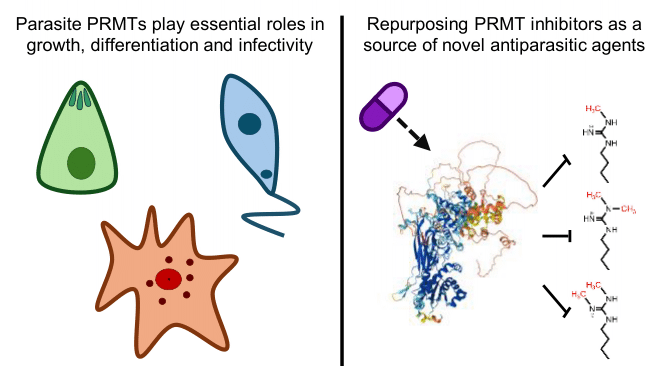
Protein arginine methyltransferases in protozoan parasites: a new path for antiparasitic chemotherapy?
Gustavo D. Campagnaro1,* and Sébastien Pomel2
This review discusses the activity and the relevance of arginine methyltransferases for the survival of pathogenic kinetoplastids, apicomplexans and amoebas, and how these enzymes could be exploited as drug targets.

VapA/Scs2 sustains polarized growth in Aspergillus nidulans by maintaining AP-2-mediated apical endocytosis
Xenia Georgiou1, Sofia Politi1, Sotiris Amillis1 and George Diallinas1,2,*
To explore the functional significance of ER–PM contact sites in filamentous fungi, we identified and genetically characterized all Aspergillus nidulans proteins homologous to Snc2/VAP, Ist2, or tricalbins.

Genetic make-up and regulation of the L-lysine biosynthesis pathway in Vibrio natriegens
Elly Straube1, Johannes Radde1, Thi Van Anh Tran1, Negin Keihani Yazdi1, Rubén Crespo Blanco1, Ha Thanh Le2, Cláudio J.R. Frazão1 and Thomas Walther1,*
This study analysed the make-up and regulation of the biosynthetic pathway for L-lysine and related L-aspartate family amino acids (AFAAs) in Vibrio natriegens DSM759 to provide a comprehensive basis for future metabolic engineering endeavours aiming at developing this strain into an amino acid overproducer.

Regulation of extracellular vesicles for protein secretion in Aspergillus nidulans
Rebekkah E. Pope1, Patrick Ballmann2, Lisa Whitworth3 and Rolf A. Prade1,*
This study reveals that Aspergillus nidulans boosts extracellular vesicle production when ER-trafficked enzymes are induced, uncovering how fungi remodel their secretome through vesicle-mediated secretion to adapt to changing environments and biofilm formation.

Transcriptomic response to different heme sources in Trypanosoma cruzi epimastigotes
Evelyn Tevere1,a, María G. Mediavilla1,a, Cecilia B. Di Capua1, Marcelo L. Merli1, Carlos Robello2,3, Luisa Berná2,4 and Julia A. Cricco
This study uncovers how the Chagas disease parasite adapts to changes in heme, an essential molecule for its survival, providing transcriptional clues to heme metabolism and identifying a previously unreported heme-binding protein in T. cruzi.
Sir2 regulates selective autophagy in stationary-phase yeast cells
Ji-In Ryua, Juhye Junga, and Jeong-Yoon Kim
This study establishes Sir2 as a previously unrecognized regulator of selective autophagy during the stationary phase and highlight how cells dynamically control organelle degradation.
Genetic make-up and regulation of the L-lysine biosynthesis pathway in Vibrio natriegens
Elly Straube1, Johannes Radde1, Thi Van Anh Tran1, Negin Keihani Yazdi1, Rubén Crespo Blanco1, Ha Thanh Le2, Cláudio J.R. Frazão1 and Thomas Walther1,*
This study analysed the make-up and regulation of the biosynthetic pathway for L-lysine and related L-aspartate family amino acids (AFAAs) in Vibrio natriegens DSM759 to provide a comprehensive basis for future metabolic engineering endeavours aiming at developing this strain into an amino acid overproducer.
Regulation of extracellular vesicles for protein secretion in Aspergillus nidulans
Rebekkah E. Pope1, Patrick Ballmann2, Lisa Whitworth3 and Rolf A. Prade1,*
This study reveals that Aspergillus nidulans boosts extracellular vesicle production when ER-trafficked enzymes are induced, uncovering how fungi remodel their secretome through vesicle-mediated secretion to adapt to changing environments and biofilm formation.
Transcriptomic response to different heme sources in Trypanosoma cruzi epimastigotes
Evelyn Tevere1,a, María G. Mediavilla1,a, Cecilia B. Di Capua1, Marcelo L. Merli1, Carlos Robello2,3, Luisa Berná2,4 and Julia A. Cricco
This study uncovers how the Chagas disease parasite adapts to changes in heme, an essential molecule for its survival, providing transcriptional clues to heme metabolism and identifying a previously unreported heme-binding protein in T. cruzi.
Sir2 regulates selective autophagy in stationary-phase yeast cells
Ji-In Ryua, Juhye Junga, and Jeong-Yoon Kim
This study establishes Sir2 as a previously unrecognized regulator of selective autophagy during the stationary phase and highlight how cells dynamically control organelle degradation.

Prohibitins: emerging host targets of bacteria and viruses at the plasma membrane, mitochondria, and cytoplasm
Grecia O. Rivera-Palomino1,2 and Arianne L. Theiss1,2,3
Prohibitins are emerging as central host hubs exploited by bacteria and viruses to rewire signaling and mitochondrial dynamics. The current review discusses Prohibitins in host-pathogen interplay and their potential as novel anti-infective targets.

Outer membrane vesicles in Vibrio species: Roles in biofilm formation and pathogenesis
Kumari Shambhavi and Durg Vijai Singh
This review explores current knowledge on outer membrane vesicles (OMVs) in Vibrio species, highlighting their roles in pathogenesis, host interaction, and marine ecology; and identifies major knowledge gaps, outlining key methodological challenges and future prospects for OMV-based applications.

The mechanism of Tat-dependent protein translocation
Thomas Brüser1,* and Carsten Sanders2,3,4
This review integrates mechanistically relevant biochemical, molecular, and structural studies on Tat-dependent translocation of folded proteins into an in its molecular detail new comprehensive explanation of how the Tat system mediates protein transport.
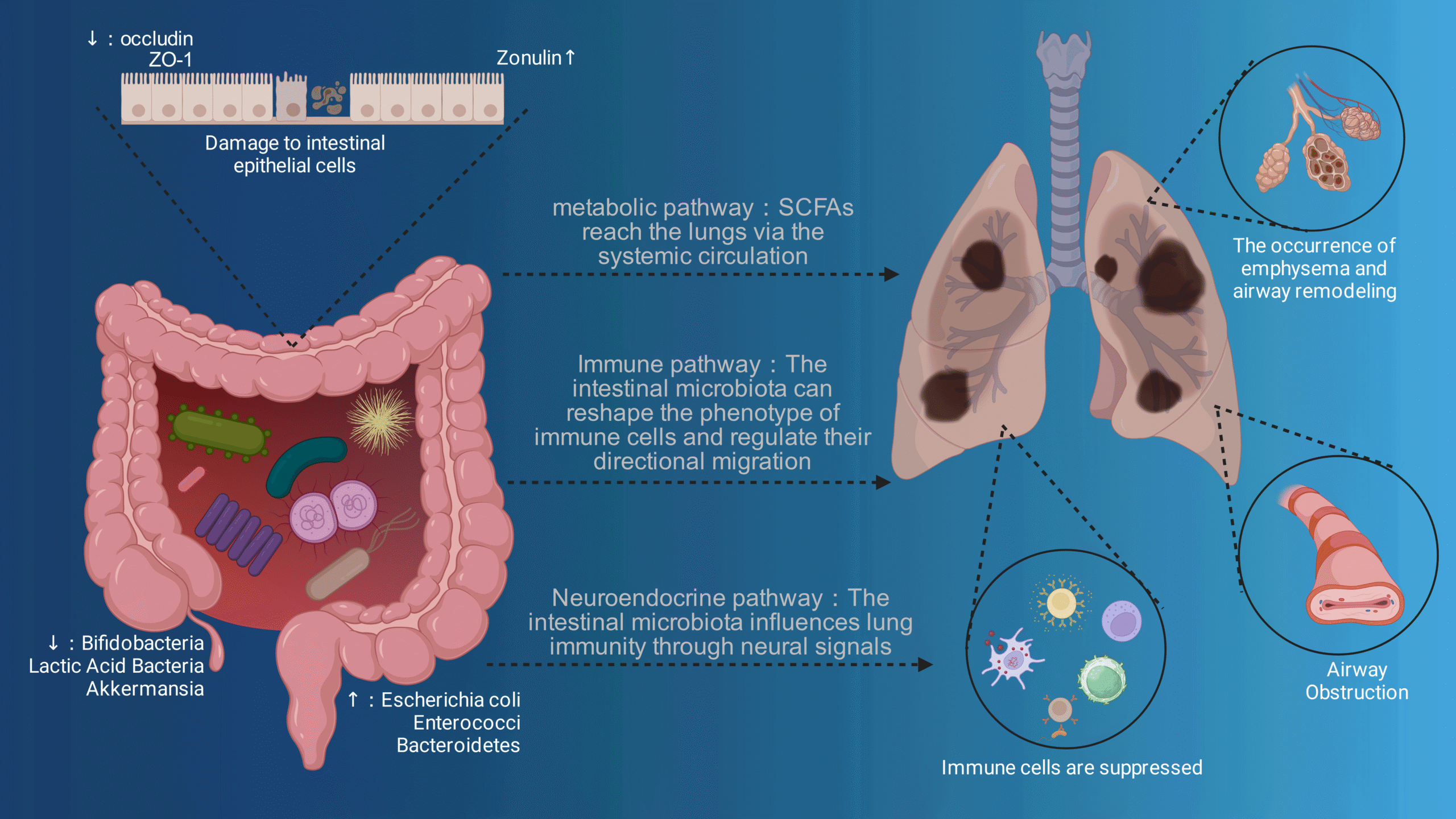
From the gut to the lungs: The role of gut microbiota in chronic obstructive pulmonary disease and related research progress
Simin Yang1,2, Shuting Zeng1,2, Yongan Deng1,2, Xiaodong Duan1,2, Chengkai Chen1,2, Luyun Sun2, Yongkang Qiao2 and Zunpeng Shu1,2
This article provides new ideas and directions for the basic research and clinical practice of COPD by comprehensively sorting out the association between gut microbiota and COPD.
Protein arginine methyltransferases in protozoan parasites: a new path for antiparasitic chemotherapy?
Gustavo D. Campagnaro1,* and Sébastien Pomel2
This review discusses the activity and the relevance of arginine methyltransferases for the survival of pathogenic kinetoplastids, apicomplexans and amoebas, and how these enzymes could be exploited as drug targets.
No results found. We're working on it!
Protein arginine methyltransferases in protozoan parasites: a new path for antiparasitic chemotherapy?
February 12, 2026
This review discusses the activity and the relevance of arginine methyltransferases for the survival of pathogenic kinetoplastids, apicomplexans and amoebas, and how these enzymes could be exploited as drug targets.
VapA/Scs2 sustains polarized growth in Aspergillus nidulans by maintaining AP-2-mediated apical endocytosis
February 5, 2026
To explore the functional significance of ER–PM contact sites in filamentous fungi, we identified and genetically characterized all Aspergillus nidulans proteins homologous to Snc2/VAP, Ist2, or tricalbins.
Genetic make-up and regulation of the L-lysine biosynthesis pathway in Vibrio natriegens
February 3, 2026
This study analysed the make-up and regulation of the biosynthetic pathway for L-lysine and related L-aspartate family amino acids (AFAAs) in Vibrio natriegens DSM759 to provide a comprehensive basis for future metabolic engineering endeavours aiming at developing this strain into an amino acid overproducer.
Regulation of extracellular vesicles for protein secretion in Aspergillus nidulans
January 28, 2026
This study reveals that Aspergillus nidulans boosts extracellular vesicle production when ER-trafficked enzymes are induced, uncovering how fungi remodel their secretome through vesicle-mediated secretion to adapt to changing environments and biofilm formation.
Transcriptomic response to different heme sources in Trypanosoma cruzi epimastigotes
January 23, 2026
This study uncovers how the Chagas disease parasite adapts to changes in heme, an essential molecule for its survival, providing transcriptional clues to heme metabolism and identifying a previously unreported heme-binding protein in T. cruzi.
Sir2 regulates selective autophagy in stationary-phase yeast cells
January 21, 2026
This study establishes Sir2 as a previously unrecognized regulator of selective autophagy during the stationary phase and highlight how cells dynamically control organelle degradation.