

Regulation of extracellular vesicles for protein secretion in Aspergillus nidulans
This study reveals that Aspergillus nidulans boosts extracellular vesicle production when ER-trafficked enzymes are induced, uncovering how fungi remodel their secretome through vesicle-mediated secretion to adapt to changing environments and biofilm formation.

Transcriptomic response to different heme sources in Trypanosoma cruzi epimastigotes
This study uncovers how the Chagas disease parasite adapts to changes in heme, an essential molecule for its survival, providing transcriptional clues to heme metabolism and identifying a previously unreported heme-binding protein in T. cruzi.

Luminal acetylation of microtubules is not essential for Plasmodium berghei and Toxoplasma gondii survival
Acetylation of α-tubulin at lysine 40 is not essential for cytoskeletal stability in Plasmodium berghei or Toxoplasma gondii, suggesting redundancy and plasticity in microtubule regulation in these parasites.

The dual-site agonist for human M2 muscarinic receptors Iper-8-naphtalimide induces mitochondrial dysfunction in Saccharomyces cerevisiae
S. cerevisiae is a model to study human GPCRs. N-8-Iper, active against glioblastoma via M2 receptor, causes mitochondrial damage in yeast by binding Ste2, highlighting evolutionary conservation of GPCRs.

Integrative Omics reveals changes in the cellular landscape of peroxisome-deficient pex3 yeast cells
To uncover the consequences of peroxisome deficiency, we compared Saccharomyces cerevisiae wild-type with pex3 cells, which lack peroxisomes, employing quantitative proteomics and transcriptomics technologies.


Overcoming phagocytosis resistance of hypervirulent Klebsiella pneumoniae by directly targeting capsules
Tsubaki et al.This study highlights a promising strategy for disarming hypervirulent K. pneumoniae by directly targeting its key virulence factors and provides novel insights into antibacterial therapeutic approaches against this clinically significant pathogen.
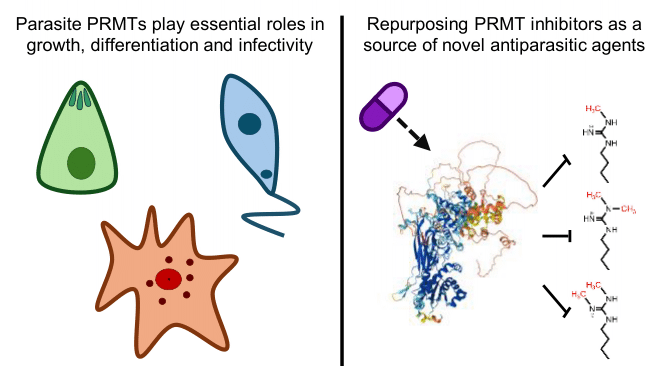
Protein arginine methyltransferases in protozoan parasites: a new path for antiparasitic chemotherapy?
Campagnaro et al.This review discusses the activity and the relevance of arginine methyltransferases for the survival of pathogenic kinetoplastids, apicomplexans and amoebas, and how these enzymes could be exploited as drug targets.

VapA/Scs2 sustains polarized growth in Aspergillus nidulans by maintaining AP-2-mediated apical endocytosis
Georgiou et al.To explore the functional significance of ER–PM contact sites in filamentous fungi, we identified and genetically characterized all Aspergillus nidulans proteins homologous to Snc2/VAP, Ist2, or tricalbins.

Genetic make-up and regulation of the L-lysine biosynthesis pathway in Vibrio natriegens
Straube et al.This study analysed the make-up and regulation of the biosynthetic pathway for L-lysine and related L-aspartate family amino acids (AFAAs) in Vibrio natriegens DSM759 to provide a comprehensive basis for future metabolic engineering endeavours aiming at developing this strain into an amino acid overproducer.
Regulation of extracellular vesicles for protein secretion in Aspergillus nidulans
Pope et al.This study reveals that Aspergillus nidulans boosts extracellular vesicle production when ER-trafficked enzymes are induced, uncovering how fungi remodel their secretome through vesicle-mediated secretion to adapt to changing environments and biofilm formation.
Transcriptomic response to different heme sources in Trypanosoma cruzi epimastigotes
Tevere et al.This study uncovers how the Chagas disease parasite adapts to changes in heme, an essential molecule for its survival, providing transcriptional clues to heme metabolism and identifying a previously unreported heme-binding protein in T. cruzi.
Sir2 regulates selective autophagy in stationary-phase yeast cells
Ryu et al.This study establishes Sir2 as a previously unrecognized regulator of selective autophagy during the stationary phase and highlight how cells dynamically control organelle degradation.
Mitochondria-Associated Membranes (MAMs) are involved in Bax mitochondrial localization and cytochrome c release
This study investigated the role of Mitochondria-Associated Membranes (MAMs) in the regulation of apoptosis by analyzing the localization and function of the pro-apoptotic protein Bax in yeast, finding that disruption of MAMs by deletion of the MDM34 gene affects Bax’s mitochondrial localization and the release of cytochrome c.
Chlamydia pneumoniae is present in the dental plaque of periodontitis patients and stimulates an inflammatory response in gingival epithelial cells
This study found that Chlamydia pneumoniae is present more frequently in the dental plaque of individuals with periodontal disease, can invade human gingival epithelial cells causing inflammatory responses, and may therefore be a contributing factor to periodontal disease and a potential indicator of risk.
Simultaneous profiling of sexually transmitted bacterial pathogens, microbiome, and concordant host response in cervical samples using whole transcriptome sequencing analysis
This study used total RNA sequencing to analyze cervical samples from women at high risk for STIs, revealing that host transcriptional profiles can be linked to microbiome composition and STI infections, with implications for advancing our understanding of PID and identifying potential biomarkers.
Genome-wide analysis of yeast expression data based on a priori generated co-regulation cliques
The study demonstrates the use of predefined genome-wide expression cliques, derived from extensive microarray data, to effectively analyze and visualize the complete gene expression response across various cellular conditions in yeast.
A humanized yeast-based toolkit for monitoring phosphatidylinositol 3-kinase activity at both single cell and population levels
In this study, a humanized yeast system for functional studies on higher eukaryotic Phosphatidylinositol 3-kinase (PI3K) was developed by restricting PI3K activity in yeast to specific plasma membrane microdomains, utilizing engineered reporters to monitor activity at a single-cell level and employing novel tools to study the performance of yeast plasma membrane (PM) microdomain-directed PI3K, revealing location-specific effects on yeast growth and endocytosis.
A chemical genetic screen reveals a role for proteostasis in capsule and biofilm formation by Cryptococcus neoformans
This study demonstrates that the bipolar disorder drug lithium inhibits the formation of key virulence factors, biofilm, and polysaccharide capsule, in Cryptococcus neoformans by dysregulating the ubiquitin/proteasome system, shedding light on the impact of lithium and providing insights into potential alternative pharmaceutical approaches for combating this fungal pathogen.
Nutritional and meiotic induction of transiently heritable stress resistant states in budding yeast
This study demonstrates that transient exposures to environmental stresses induce persistent states of elevated stress resistance in yeast cells, termed cellular memory, suggesting a form of epigenetic inheritance, and shows that this phenomenon occurs not only in meiotically produced spores but also in haploid cells subjected to glucose withdrawal, adding new insights into the developmentally and nutritionally induced cellular memory.
Specific mutations in the permease domain of septal protein SepJ differentially affect functions related to multicellularity in the filamentous cyanobacterium Anabaena
In this study, the multifunctional roles of the SepJ protein in the multicellular function of the Anabaena filament were investigated, revealing that specific amino acids and stretches within the protein are essential for the formation of long filaments, heterocyst differentiation, and intercellular communication, shedding light on the structure and diverse functions of SepJ in the model heterocyst-forming cyanobacterium Anabaena sp. strain PCC 7120.
Trehalose-6-phosphate promotes fermentation and glucose repression in Saccharomyces cerevisiae
This study examined the capability of trehalose-6-phosphate synthase (TPS1) homologues from various species to complement the phenotypic defects of a Saccharomyces cerevisiae tps1 mutant, resulting in the classification of complementation into different groups based on metabolic patterns and fermentation capacity, shedding light on the role of TPS1 and trehalose-6-phosphate (T6P) as critical factors in sugar fermentation and glucose repression.
Structural insights into the architecture and assembly of eukaryotic flagella
Petriman and Lorentzen.Cilia and flagella are key structures in motility and signaling. This review highlights recent findings of cryo-EM studies that have mapped the structure of axonemal microtubules in Chlamydomonas reinhardtii, revealing over 30 associated proteins as well as recent researcht which focused on the trafficking complexes that transport components between the cell body and cilium.
Erythrocyte phospho-signalling is dynamically altered during infection with Plasmodium falciparum
Adderley and DoerigThis article refers to the study “Analysis of erythrocyte signalling pathways during Plasmodium falciparum infection identifies targets for host-directed antimalarial intervention” by Adderley et al. (Nat Commun, 2020) that investigates how Plasmodium falciparum malaria parasites influence red blood cells. By tracking hanges in over 800 human proteins at different parasite stages they confirmed activation of the PAK-MEK pathway and discovered significant changes, particularly during the trophozoite stage. This suggests that kinases activated by the infection could be targeted for new antimalarial therapies.
Plant and fungal products that extend lifespan in Caenorhabditis elegans
Martel et al.Caenorhabditis elegans’ lifespan is extended by plant and fungal extracts activating pathways like autophagy and mitochondrial biogenesis. Low to moderate concentrations promote longevity, while high doses are harmful. This review explores the health benefits of these substances in humans.
A new role for proteins subunits of RNase P: stabilization of the telomerase holoenzyme
Garcia and Zakian.This article refers to the study “Stability and Nuclear Localization of Yeast Telomerase Depend on Protein Components of RNase P/MRP”, by Garcia et al. (Nat Commun, 2020), showing that 3 essential proteins in Saccharomyces cerevisiae are vital for telomerase assembly and nuclear localization. In their mutants, telomerase is less mature, and telomeres are shorter. TLC1 is properly folded but remains in the cytoplasm, rather than moving to the nucleus, where it maintains telomeres.
Lipid droplet biogenesis from specialized ER subdomains
Choudhary and SchneiterThis article refers to the paper “Seipin and Nem1 establish discrete ER subdomains to initiate yeast lipid droplet biogenesis” by Choudhary et al. (J Cell Biol, 2020), which deals with the formation of lipid droplets (LDs) at specific ER sites marked by the proteins Fld1 and Nem1. These proteins recruit enzymes such as Lro1 and Dga1 to initiate fat storage. Together, Fld1 and Nem1 define where LDs form by organising key proteins and lipids needed for their biogenesis.
From the Uncharacterized Protein Family 0016 to the GDT1 family: Molecular insights into a newly-characterized family of cation secondary transporters
Thines et al.This review outlines how the formerly uncharacterized UPF0016 family, now known as the Gdt1 family, plays key roles in cation transport – especially Mn²⁺ – across species from bacteria to humans. These proteins are crucial for processes like glycosylation, photosynthesis, and calcium signaling, with functions linked to their localization in membranes such as the Golgi, chloroplast, and plasma membrane and by that highlighting their evolutionary conservation and physiological relevance, offering insights into their shared and distinct features across organisms.
A broad-spectrum antibiotic adjuvant SLAP-S25: one stone many birds
This article refers to the study “A broad-spectrum antibiotic adjuvant reverses multidrug-resistant Gram-negative pathogens” by Song et al. (Nat Microbiol, 2020), which deals with the growing threat of antibiotic resistance, with few new drugs being developed for decades. The study found that the peptide SLAP-S25 enhances the efficacy of several antibiotics against resistant Gram-negative bacteria by disrupting their membranes, thereby increasing drug uptake. This suggests that bacterial membranes are promising targets for new antibiotic adjuvants.
Hiding in plain sight: vesicle-mediated export and transmission of prion-like proteins
KabaniThis article relates to the study “Glucose availability dictates the export of the soluble and prion forms of Sup35p via periplasmic or extracellular vesicles” by Kabani et al. (Mol Microbiol, 2020) that provides compelling evidence that yeast prions, such as Sup35p in its infectious [PSI⁺] state, can be exported via both extracellular vesicles (EVs) and periplasmic vesicles (PVs), with this export being modulated by environmental glucose levels. The discovery that prion particles are released in high amounts through PVs during glucose starvation adds a new dimension to our understanding of prion transmission and opens up fascinating possibilities for exploring vesicle-mediated spread of protein aggregates in neurodegenerative diseases using yeast as a model system.
Regulation of Cdc42 for polarized growth in budding yeast
Miller et al.This review highlights how studies in budding yeast have revealed a biphasic mechanism of Cdc42 activation that governs cell polarity establishment, with implications for understanding similar processes in mammalian cells and the role of Cdc42 in aging.

Patterns of protein synthesis in the budding yeast cell cycle: variable or constant?
No et al.Proteins are the principal macromolecular constituent of proliferating cells, and protein synthesis is viewed as a primary metric of cell growth. While there are celebrated examples of proteins whose levels are periodic in the cell cycle (e.g., cyclins), the concentration of most proteins was not thought to change in the cell cycle, but some recent results challenge this notion. The ‘bulk’ protein is the focus of this article, specifically the rate of its synthesis, in the budding yeast Saccharomyces cerevisiae.
Ribose 5-phosphate: the key metabolite bridging the metabolisms of nucleotides and amino acids during stringent response in Escherichia coli?
Grucela et al.Here we propose the metabolite ribose 5’-phosphate as the key link between nucleotide and amino acid metabolisms and a working model integrating both the transcriptional and metabolic effects of (p)ppGpp on E. coli physiological adaptation during the stringent response.
Flagellated bacterial porter for in situ tumor vaccine
Xu et al.Cancer immunotherapy, which use the own immune system to attack tumors, are increasingly popular treatments. But, due to the tumor immunosuppressive microenvironment, the antigen presentation in the tumor is limited. Recently, a growing number of people use bacteria to stimulate the body’s immunity for tumor treatment due to bacteria themselves have a variety of elements that activate Toll-like receptors. Here, we discuss the use of motility of flagellate bacteria to transport antigens to the tumor periphery to activate peritumoral dendritic cells to enhance the effect of in situ tumor vaccines.
The rise of Candida auris: from unique traits to co-infection potential
Egger et al.Candida auris is a multidrug resistant (MDR) fungal pathogen with a crude mortality rate of 30-60%. First identified in 2009, C. auris has been rapidly rising to become a global risk in clinical settings and was declared an urgent health threat by the Centers for Disease Control and Prevention (CDC). A concerted global action is thus needed to successfully tackle the challenges created by this emerging fungal pathogen. In this brief article, we underline the importance of unique virulence traits, including its easy transformation, its persistence outside the host and its resilience against multiple cellular stresses, as well as of environmental factors that have mainly contributed to the rise of this superbug.
A hundred spotlights on microbiology: how microorganisms shape our lives
Carmona-Gutierrez et al.Viral, bacterial, fungal and protozoal biology is of cardinal importance for the evolutionary history of life, ecology, biotechnology and infectious diseases. Various microbiological model systems have fundamentally contributed to the understanding of molecular and cellular processes, including the cell cycle, cell death, mitochondrial biogenesis, vesicular fusion and autophagy, among many others. Microbial interactions within the environment have profound effects on many fields of biology, from ecological diversity to the highly complex and multifaceted impact of the microbiome on human health. Also, biotechnological innovation and corresponding industrial operations strongly depend on microbial engineering. With this wide range of impact in mind, the peer-reviewed (…)
Yeast goes viral: probing SARS-CoV-2 biology using S. cerevisiae
Ho et al.The budding yeast Saccharomyces cerevisiae has long been an outstanding platform for understanding the biology of eukaryotic cells. Robust genetics, cell biology, molecular biology, and biochemistry complement deep and detailed genome annotation, a multitude of genome-scale strain collections for functional genomics, and substantial gene conservation with Metazoa to comprise a powerful model for modern biological research. Recently, the yeast model has demonstrated its utility in a perhaps unexpected area, that of eukaryotic virology. Here we discuss three innovative applications of the yeast model system to reveal functions and investigate variants of proteins encoded by the SARS-CoV-2 virus.
Murals meet microbes: at the crossroads of microbiology and cultural heritage
Bauer et al.This article comments on the duality of microorganisms in the conservation and restoration of cultural heritage, which encompasses the negative impact of damaging microorganisms and recent advances in using specific microorganisms and microbial-based technologies for cultural heritage preservation.
Urm1, not quite a ubiquitin-like modifier?
Kaduhr et al.This article comments on work published by Brachmann et al. (Redox Biol, 2020), which studied urmylation of the yeast 2-Cys peroxiredoxin Ahp1, uncovering that promiscuous lysine target sites and specific redox requirements determine the Urm1 acceptor activity of the peroxiredoxin.
Can’t find what you’re looking for?
You can browse all our issues and published articles here.
FAQs
Peer-reviewed, open-access research using unicellular organisms (and multicellular microorganisms) to understand cellular responses and human disease.
The journal (founded in 2014) is led by its Editors-in-Chief Frank Madeo, Didac Carmona-Gutierrez, and Guido Kroemer
Microbial Cell has been publishing original scientific literature since 2014, and from the very beginning has been managed by active scientists through an independent Publishing House (Shared science Publishers). The journal was conceived as a platform to acknowledge the importance of unicellular organisms, both as model systems as well as in the biological context of human health and disease.
Ever since, Microbial Cell has very positively developed and strongly grown into a respected journal in the unicellular research community and even beyond. This scientific impact is reflected in the yearly number of citations obtained by articles published in Microbial Cell, as recorded by the Web of Science (Clarivate, formerly Thomson/Reuters):

The scientific impact of Microbial Cell is also mirrored in a series of milestones:
2015: Microbial Cell is included in the Emerging Sources Citation Index (ESCI), a selection of developing journals drafted by Clarivate Analytics based on the candidate’s publishing standards, quality, editorial content, and citation data. Note: As an ESCI-selected journal, Microbial Cell is currently being evaluated in a rigorous and long process to determine an inclusion in the Science Citation Index Expanded (SCIE), which allows the official calculation of Clarivate Analytics’ impact factor.

2016: Microbial Cell is awarded the so-called DOAJ Seal by the selective Directory of Open Access Journals (DOAJ). The DOAJ Seal is an exclusive mark of certification for open access journals granted by DOAJ to journals that adhere to outstanding best practice and achieve an extra high and clear commitment to open access and high publishing standards.

2017: Microbial Cell is included in Pubmed Central (PMC), allowing the archiving of all the journal’s articles in PMC and PubMed.

2019: Microbial Cell is indexed in the prestigious abstract and citation database Scopus after a thorough selection process. This also means that Microbial Cell obtains, for the first time, an official Scopus CiteScore as well as an official journal ranking in the Scimago Journal and Country Ranking.

2022: Microbial Cell’s CiteScore reaches a value of 7.2 for the year 2021, positioning Microbial Cell among the top microbiology journals (previously available CiteScores: 2019: 5.4; 2020: 5.1).

2022: Microbial Cell is indexed in the highly selective Science Citation Index Expanded™, which covers approx. 9,500 of the world’s most impactful journals across 178 scientific disciplines. In their journal selection and curation process, Clarivate´s editors apply 24 ‘quality’ criteria and four ‘impact’ criteria to select the most influential journals in their respective fields. This selection is also a pre-requisite for inclusion in the JCR, which features the impact factor.

2022: Microbial Cell is listed in the Journal Citation Reports™ (JCR), and obtains its first official Journal Impact Factor™ (JIF) for the year 2021: 5.316.Check Article Types and Manuscript Preparation guidelines. Submit online via Scholastica.
It takes four to tango: the cooperative adventure of scientific publishing
Carmona-Gutierrez et al.This Editorial is the 500th article published in Microbial Cell, a journey that started in 2014 and has seen the journal grow steadily and maintain itself as a respected community platform. The foundation that has allowed for and driven this development – as for any responsible journal – is composed of four essential pillars: the readers, the authors, the editors and the referees.