
Research, Research Articles
Sir2 regulates selective autophagy in stationary-phase yeast cells
Ji-In Ryua, Juhye Junga, and Jeong-Yoon Kim
This study establishes Sir2 as a previously unrecognized regulator of selective autophagy during the stationary phase and highlight how cells dynamically control organelle degradation.

Luminal acetylation of microtubules is not essential for Plasmodium berghei and Toxoplasma gondii survival
Thrishla Kumar1,a, Katharina Röver2,a, Johannes F. Stortz3,a, Annika M. Binder2,a, Benjamin Spreng2, Madlen Konert2, Markus Meissner1, Friedrich Frischknecht2,4 and Elena Jimenez-Ruiz1,*
Acetylation of α-tubulin at lysine 40 is not essential for cytoskeletal stability in Plasmodium berghei or Toxoplasma gondii, suggesting redundancy and plasticity in microtubule regulation in these parasites.

The dual-site agonist for human M2 muscarinic receptors Iper-8-naphtalimide induces mitochondrial dysfunction in Saccharomyces cerevisiae
Angela Cirigliano1,a, Antonia Amelina2,a, Elena Passarini2, Alessandra Ricelli1, Nicole Balasco1, Mattia Mori3, Bruno Botta4, Maria Egle De Stefano2,5, Claudio Papotto6, Claudia Guerriero2, Ada Maria Tata2,5 and Teresa Rinaldi2,*
S. cerevisiae is a model to study human GPCRs. N-8-Iper, active against glioblastoma via M2 receptor, causes mitochondrial damage in yeast by binding Ste2, highlighting evolutionary conservation of GPCRs.

The core genetic drivers of chronological aging in yeast are universal regulators of longevity
Erika Cruz-Bonilla1, Sergio E. Campos2, Soledad Funes3, Cei Abreu-Goodger4 and Alexander DeLuna1,2,*
This study provides an integrated view of the core genetic landscape underlying aging in yeast, highlighting the value of the chronological lifespan paradigm for investigating conserved mechanisms of aging.

Organelle activity organized by the endoplasmic reticulum-mitochondria encounter structure –ERMES– is essential for Podospora anserina development
Melisa Álvarez-Sánchez1, Matías Ramírez-Noguez1, Beatriz Aguirre-López1 and Leonardo Peraza-Reyes1
This study shows that the regulation of the activity of multiple organelles by the ERMES (Endoplasmic Reticulum-Mitochondria Encounter Structure) tethering complex is essential for fungal growth and sexual development.
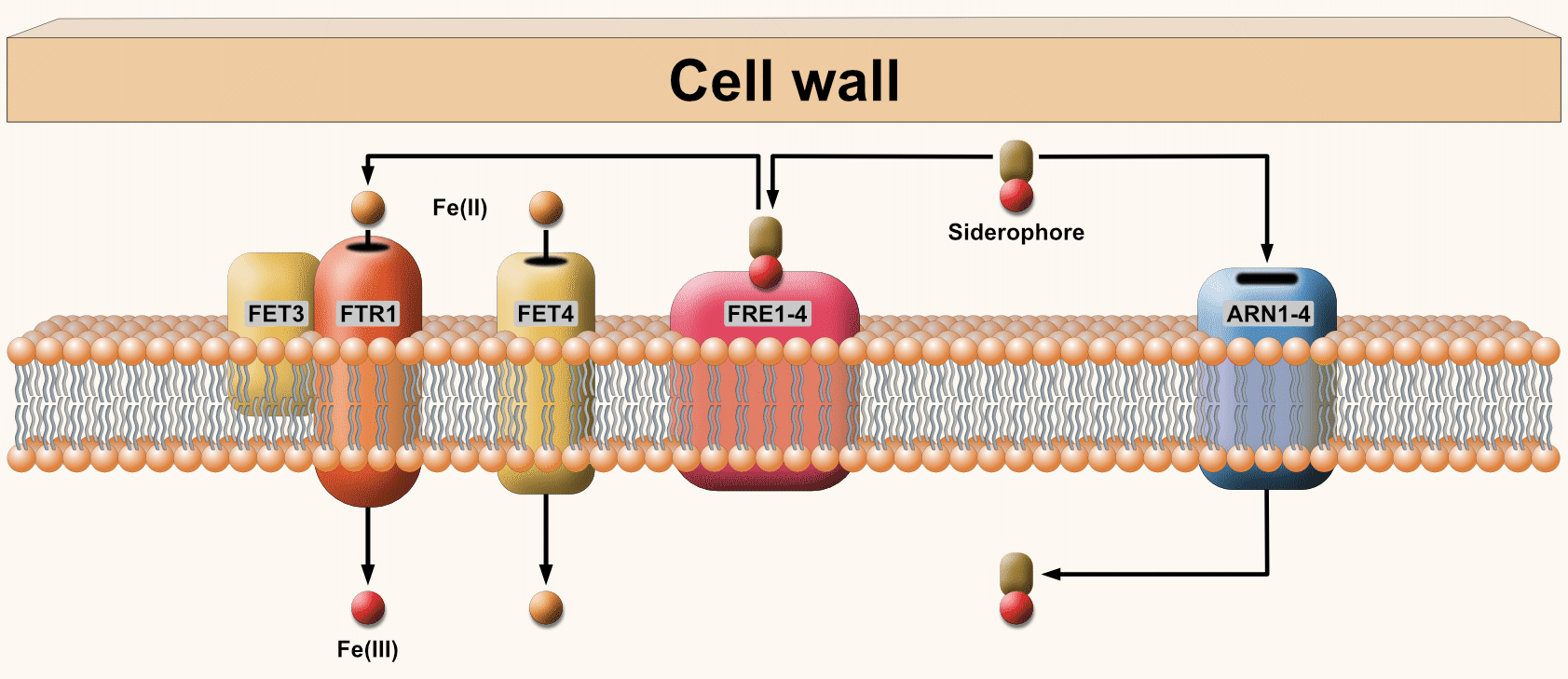
Role of the putative sit1 gene in normal germination of spores and virulence of the Mucor lusitanicus
Bernadett Vágó1,2, Kitti Bauer1,2, Naomi Varghese1,2, Sándor Kiss-Vetráb1,2, Sándor Kocsubé1,2, Mónika Varga1,2, András Szekeres1,2, Csaba Vágvölgyi1,2, Tamás Papp1,2,3,# and Gábor Nagy1,2,3,#
Mucormycosis is a life-threatening infection caused by certain members of the fungal order Mucorales, with increased incidence in recent years. Individuals with untreated diabetes mellitus, and patients treated with deferoxamine are particularly susceptible to this infection.

Tumor microenvironment signatures enhances lung adenocarcinoma prognosis prediction: Implication of intratumoral microbiota
Fei Zhao1,#, Lei Wang2,3,4,#, Dongjie Du5, Heaven Zhao6,7, Geng Tian6,7, Yufeng Li2,3,8, Yankun Liu2,8,9, Zhiwu Wang2,3,10, Dasheng Liu11, Jingwu Li2,3,12, Lei Ji6,7 and Hong Zhao1
The interaction between intratumoral microbiome and the tumor microenvironment (TME) has furthered our understanding of tumor ecology. Yet, the implications of their interaction for lung cancer management remain unclear.

Persistence phenotype of adherent-invasive Escherichia coli in response to ciprofloxacin, revealing high-persistence strains
Valeria Pérez-Villalobos1, Roberto Vidal2, Marcela A. Hermoso3,4 and Paula Bustamante1
We investigated the roles of the resident antibiotic resistance plasmid, the stress response protein HtrA, and macrophage-induced persister formation. Our results revealed broad variability in persister cell formation among AIEC strains.

Knocking out histidine ammonia-lyase by using CRISPR-Cas9 abolishes histidine role in the bioenergetics and the life cycle of Trypanosoma cruzi
Janaína de Freitas Nascimento1, María Julia Barisón1, Gabriela Torres Montanaro1, Letícia Marchese1, Rodolpho Ornitz Oliveira Souza1, Letícia Sophia Silva2, Alessandra Aparecida Guarnieri2 and Ariel Mariano Silber1
Recent studies have highlighted the importance of this pathway in ATP production, redox balance, and the maintenance of cellular homeostasis in T. cruzi. In this work, we focus on the first step of the histidine degradation pathway, which is performed by the enzyme histidine ammonia lyase. Here we determined the kinetic and biochemical parameters of the T. cruzi histidine ammonia-lyase.
Snf1 cooperates with the CWI MAPK pathway to mediate the degradation of Med13 following oxidative stress
June 25, 2018
This article explores the response of eukaryotic cells to environmental stress, highlighting the role of the conserved cyclin C-Cdk8 kinase in determining pro-survival or pro-death programs. Specifically, it discusses how oxidative stress triggers the destruction of Med13 by the SCFGrr1 ubiquitin ligase, releasing cyclin C to promote mitochondrial fission and cell death in Saccharomyces cerevisiae. Additionally, it reveals that the AMP kinase Snf1 activates a separate degron in Med13, contributing to the complex regulation of Med13 degradation following H2O2 stress through the coordination of the cell wall integrity and MAPK pathways.
Importance of polyphosphate in the Leishmania life cycle
June 22, 2018
This article explores the importance of polyphosphate (polyP) in Leishmania parasites, emphasizing the role of the polyP polymerase VTC4 and its impact on parasite survival at higher temperatures. Additionally, it discusses the effects of VTC4 knockout in mouse infections, noting a delay in lesion formation and strong pathology in L. major VTC4 knockout, without confirmation through complementation and no alteration in L. guyanensis infections in mice with VTC4 knockdown.
Antagonism between salicylate and the cAMP signal controls yeast cell survival and growth recovery from quiescence
March 26, 2018
This article describes the effects of salicylate, the main metabolite of aspirin, on S. cerevisiae cells. It outlines how salicylate influences glucose transport, sugar phosphate biosynthesis, and apoptosis, particularly in MnSOD-deficient cells. Furthermore, it emphasizes the significant impact of salicylate on the exit from a quiescent state, inhibiting growth recovery and viability in long-term stationary phase cells. The passage also discusses the potential therapeutic implications of understanding the antagonistic relationship between cAMP and salicylate in targeting quiescent cancer cells with stem-like properties.
Spontaneous mutations in CYC8 and MIG1 suppress the short chronological lifespan of budding yeast lacking SNF1/AMPK
February 19, 2018
Chronologically aging yeast cells are prone to adaptive regrowth, whereby mutants with a survival advantage spontaneously appear and re-enter the cell cycle in stationary phase cultures. Here, Magani et al. identified specific downstream SNF1 targets responsible for CLS extension during CR.
Production of poly-β-1,6-N-acetylglucosamine by MatAB is required for hyphal aggregation and hydrophilic surface adhesion by Streptomyces
February 12, 2018
In this article van Dissel et al. describe new insights to allow better control of liquid-culture morphology of streptomycetes, which may be harnessed to improve growth and industrial exploitation of these highly versatile natural product and enzyme producers.
Non-canonical regulation of glutathione and trehalose biosynthesis characterizes non-Saccharomyces wine yeasts with poor performance in active dry yeast production
January 26, 2018
Several yeast species, belonging to Saccharomyces and non-Saccharomyces genera, play fundamental roles during spontaneous must grape fermentation, and recent studies have shown that mixed fermentations, co-inoculated with S. cerevisiae and non-Saccharomyces strains, can improve wine organoleptic properties. Here, Gamero-Sandemetrio et al. present findings that non-canonical regulation of glutathione and trehalose biosynthesis could cause poor fermentative performance after active dry yeast (ADY) production, as it corroborates the corrective effect of antioxidant treatments, during biomass propagation, with both pure chemicals and food-grade argan oil.
Molecular signature of the imprintosome complex at the mating-type locus in fission yeast
January 16, 2018
Genetic and molecular studies have indicated that an epigenetic imprint at mat1, the sexual locus of fission yeast, initiates mating type switching. Here, Raimondi et al. characterized the recruitment of early players of mating type switching at the mat1 region and suggest a nucleoprotein protective structure defined as imprintosome.
A novel system to monitor mitochondrial translation in yeast
January 13, 2018
In this study Suhm et al. present a novel system to monitor mitochondrial translation by detection of mitochondrial GFP-translation through fluorescence microscopy and flow cytometry in functional mitochondria. This novel tool allows the investigation of the function and regulation of mitochondrial translation during stress signaling, aging and mitochondrial biogenesis.