
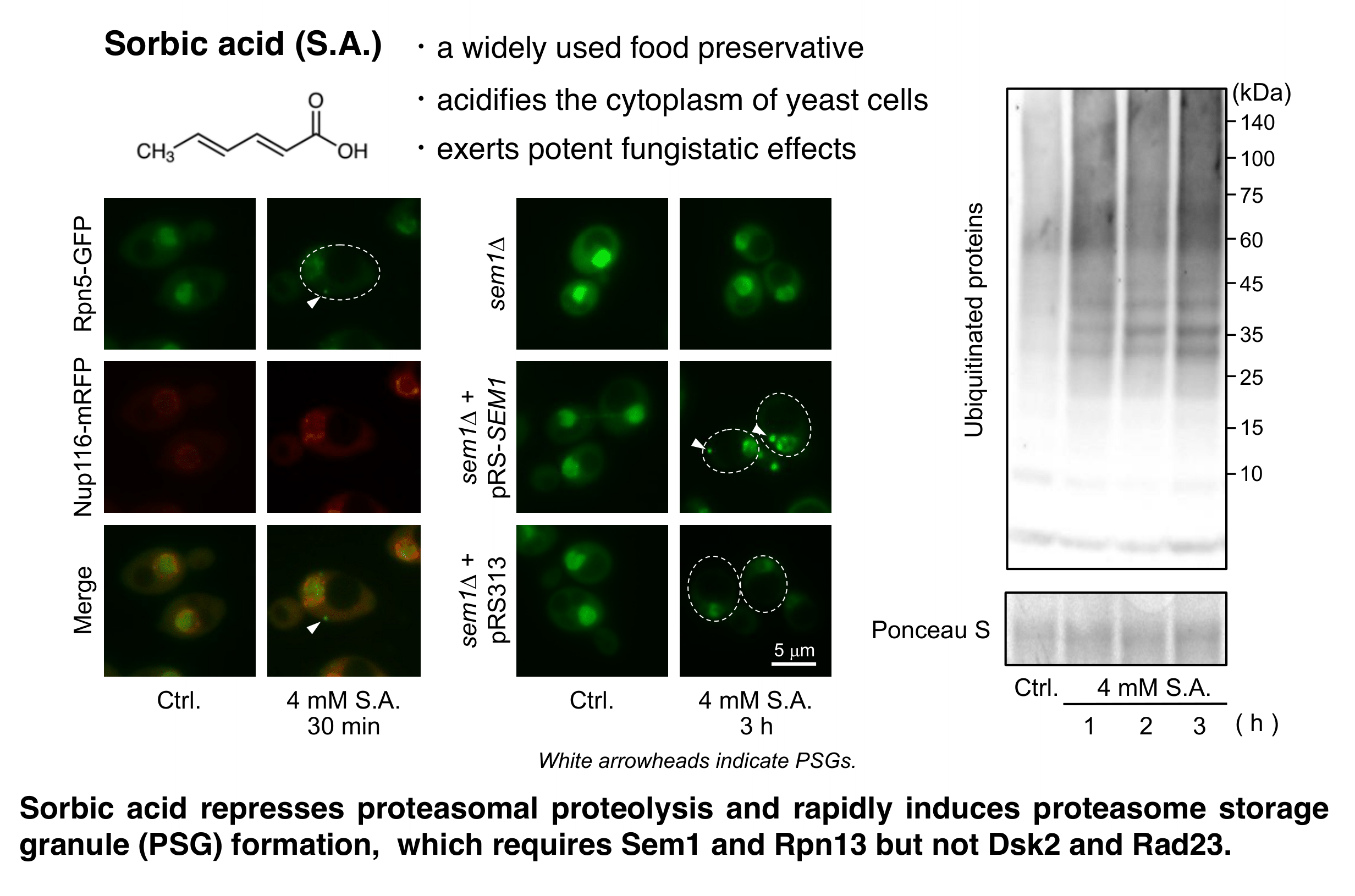
Sorbic acid triggers rapid formation of proteasome storage granules in Saccharomyces cerevisiae
This study demonstrates that sorbic acid, a common food preservative, induces the fastest reported proteasome storage granule (PSG) formation in yeast within 30 min, highlighting differences from other PSG-inducing conditions like acetic acid stress.

Saccharomyces cerevisiae in cancer research: modeling tumor biology and enabling drug discovery
By combining genetic tractability with conservation of key cellular pathways, Saccharomyces cerevisiae is emerging as a versatile model for cancer biology and a scalable platform for identifying therapeutic targets and vulnerabilities.

A time-resolved high-throughput screening of fission yeast deletion mutants for oxidative stress resistance
By capturing dynamic trajectories rather than static outcomes, this study exposes hidden layers of growth under oxidative stress and identifies new genetic determinants of cellular resilience in fission yeast.

Clonal spread and environmental persistence of carbapenem-resistant high-risk Pseudomonas aeruginosa in critical-care units of a Chilean national referral center for burn and trauma patients (2022)
This study highlight the circulation of high-risk P. aeruginosa clones in Chile and underscore the importance of molecular epidemiology in guiding infection control, optimizing antimicrobial therapy, and mitigating the clinical and economic burden of CRPA.

The transcriptome of dendritic cells redraws the boundaries between pathogenicity and commensalism in yeast
Our immune system meets many fungi, but reacts strongly to only a few. The comparison of key fungal species showed that responses differ mainly in timing and not just genes, highlighting the need to rethink what makes fungi harmful vs. harmless.

Sorbic acid triggers rapid formation of proteasome storage granules in Saccharomyces cerevisiae
Tanaka et al.This study demonstrates that sorbic acid, a common food preservative, induces the fastest reported proteasome storage granule (PSG) formation in yeast within 30 min, highlighting differences from other PSG-inducing conditions like acetic acid stress.
Saccharomyces cerevisiae in cancer research: modeling tumor biology and enabling drug discovery
Assalve et al.By combining genetic tractability with conservation of key cellular pathways, Saccharomyces cerevisiae is emerging as a versatile model for cancer biology and a scalable platform for identifying therapeutic targets and vulnerabilities.
A time-resolved high-throughput screening of fission yeast deletion mutants for oxidative stress resistance
Pirsalehi et al.By capturing dynamic trajectories rather than static outcomes, this study exposes hidden layers of growth under oxidative stress and identifies new genetic determinants of cellular resilience in fission yeast.
Clonal spread and environmental persistence of carbapenem-resistant high-risk Pseudomonas aeruginosa in critical-care units of a Chilean national referral center for burn and trauma patients (2022)
Ibarra et al.This study highlight the circulation of high-risk P. aeruginosa clones in Chile and underscore the importance of molecular epidemiology in guiding infection control, optimizing antimicrobial therapy, and mitigating the clinical and economic burden of CRPA.
The transcriptome of dendritic cells redraws the boundaries between pathogenicity and commensalism in yeast
Rizzetto et al.Our immune system meets many fungi, but reacts strongly to only a few. The comparison of key fungal species showed that responses differ mainly in timing and not just genes, highlighting the need to rethink what makes fungi harmful vs. harmless.

Yippee-like protein Moh1 links gene expression to metabolism and selective stress resistance in Saccharomyces cerevisiae
Olgun et al.This study demonstrates that the conserved yeast protein Moh1 links metabolism, gene expression, and cell structure, thereby altering cell envelope permeability and leading to selective stress responses.

Fungistatic effect of sorbic acid on yeast cells via translational repression involving eIF2α phosphorylation and formation of Ded1- and eIF2B-granules
Yoshiyama et al.The findings of this study provide new insights into the physiological effects of sorbic acid on yeast cells, specifically regarding the regulation of translation-related factors.

Occlusal types shape oral microbiome stomatotypes and metabolic landscapes: A multi-omics perspective on host-microbe interaction
Duan et alThis study reveals how occlusal types shape oral microbiome “stomatotypes” and metabolic profiles in adolescents. It offers fresh insights that host anatomy drives microecology which may be associated with personalized oral health.

Prohibitins: emerging host targets of bacteria and viruses at the plasma membrane, mitochondria, and cytoplasm
Rivera-Palomino and TheissProhibitins are emerging as central host hubs exploited by bacteria and viruses to rewire signaling and mitochondrial dynamics. The current review discusses Prohibitins in host-pathogen interplay and their potential as novel anti-infective targets.
Metabolic reprogramming of Salmonella infected macrophages and its modulation by iron availability and the mTOR pathway
Telser et al.This article shows that iron plays a critical role in both the immune response and metabolic reprogramming of macrophages during infection, influencing the TCA cycle and mTOR pathway, with implications for the growth of intracellular bacteria like Salmonella.
Transcriptomic and chemogenomic analyses unveil the essential role of Com2-regulon in response and tolerance of Saccharomyces cerevisiae to stress induced by sulfur dioxide
Lage et al.This article shows that in the presence of sulfur dioxide (SO2), the transcription factor Com2 plays a critical role in the tolerance and response of Saccharomyces cerevisiae, affecting the expression of a majority of SO2-activated genes and contributing to the protection against stress induced by SO2 at an enologically relevant pH.
Network dynamics of the yeast methyltransferome
Giaever et al.This article presents a systematic genetic analysis of methyltransferases (MTases) under normal and stress conditions, uncovering the complex and adaptive nature of the methyltransferome and discovering a potential connection between phospholipid methylation and histone methylation, suggesting interplay between lipid homeostasis and epigenetic regulation.
Functional link between mitochondria and Rnr3, the minor catalytic subunit of yeast ribonucleotide reductase
Corcoles-Saez et al.This article shows that the carbon source affects the abundance of ribonucleotide reductase (RNR) subunits in yeast, with a novel Mec1 signaling axis regulating Rnr3 independently of known DNA damage response pathways, and reveals Rnr3’s unexpected role in mitochondrial function.
Mitochondria-Associated Membranes (MAMs) are involved in Bax mitochondrial localization and cytochrome c release
Légiot et al.This study investigated the role of Mitochondria-Associated Membranes (MAMs) in the regulation of apoptosis by analyzing the localization and function of the pro-apoptotic protein Bax in yeast, finding that disruption of MAMs by deletion of the MDM34 gene affects Bax’s mitochondrial localization and the release of cytochrome c.
Chlamydia pneumoniae is present in the dental plaque of periodontitis patients and stimulates an inflammatory response in gingival epithelial cells
Almeida-da-Silva et al.This study found that Chlamydia pneumoniae is present more frequently in the dental plaque of individuals with periodontal disease, can invade human gingival epithelial cells causing inflammatory responses, and may therefore be a contributing factor to periodontal disease and a potential indicator of risk.
Simultaneous profiling of sexually transmitted bacterial pathogens, microbiome, and concordant host response in cervical samples using whole transcriptome sequencing analysis
O’Connell et al.This study used total RNA sequencing to analyze cervical samples from women at high risk for STIs, revealing that host transcriptional profiles can be linked to microbiome composition and STI infections, with implications for advancing our understanding of PID and identifying potential biomarkers.
A holobiont view on thrombosis: unravelling the microbiota’s influence on arterial thrombus growth
Pontarollo et al.In this article, the authors comment on the study “The microbiota promotes arterial thrombosis in low-density lipoprotein receptor-deficient mice” by Kiouptsi et al. (mBio, 2019) that showed that commensal microbiota, intricately linked to host physiology, may influence cardiovascular disease, as shown by studies using germ-free atherosclerosis-prone mice to examine how microbial presence and diet affect arterial thrombosis and lesion development.
The role of Lactobacillus species in the control of Candida via biotrophic interactions
Zangl et al.Microbial communities, including Candida and Lactobacillus species, play a crucial role in human health, particularly in the context of mucosal infections, but our understanding of their interactions and effects is still incomplete due to the variability of species and isolates as well as the complexity of the human host.
Tribal warfare: Commensal Neisseria kill pathogen Neisseria gonorrhoeae using its DNA
So and RendónThis article comments on work published by Kim et al (Cell Host Microbe, 2019), which adds a new dimension to the concept of commensal protection. It shows that commensal Neisseria kill the closely related pathogen N. gonorrhoeae through an unexpected mechanism, one that involves genetic competence, DNA methylation state and recombination.
Yet another job for the bacterial ribosome
Origi et al.This article comments on work published by Knüpffer et al (mBio, 2019), which revealed the intricate interaction of uL23 with yet another essential player in bacteria, the ATPase SecA, which is best known for its role during post-translational secretion of proteins across the bacterial SecYEG translocon
Gut microbial metabolites in depression: understanding the biochemical mechanisms
Caspani et al.This article shows how the gut microbiota contributes to the pathophysiology of depression and examines the mechanisms by which microbially-derived molecules may influence depressive behavior, highlighting the potential of dietary interventions as novel therapeutic strategies.
The multiple functions of the numerous Chlamydia trachomatis secreted proteins: the tip of the iceberg
Bugalhão and MotaCThis article shows an in-depth review on the current knowledge and outstanding questions about secreted proteins from Chlamydia trachomatis, detailing their roles in host cell interaction and immune response evasion.
Inhibiting eukaryotic ribosome biogenesis: Mining new tools for basic research and medical applications
Kofler et al.This article comments on work published by Awad et al (BMC Biology, 2019), which screened for novel inhibitors of the ribosome biogenesis pathway in yeast.
Diverse conditions support near-zero growth in yeast: Implications for the study of cell lifespan
Gulli et al.This review discusses alternative cultivation methods for baker’s yeast to study its chronological lifespan, with the aim of better understanding the ageing of non-dividing cells and their potential implications for the lifespan of multicellular eukaryotes such as humans.
Evolution of the bacterial nucleosidase PpnN and its relation to the stringent response
Bærentsen et al.This article comments on work published by Zhang et al (Mol Cell, 2019), which discovered an interesting mode of regulation of purine metabolism unique to Proteobacteria.
Means of intracellular communication: touching, kissing, fusing
SpangThis work highlights different aspects of communication between organelles, including the importance of organellar contact sites.
Neuropathogenesis caused by Trypanosoma brucei, still an enigma to be unveiled
FigarellaThis Editorial addresses the meningo-encephalitic stage of Trypanosoma brucei infection and the resultig neuropathogenesis as well as the impact that the application of tools developed in the last years in the field of neuroscience will have on the study of neglected tropical diseases.
Lichens – growing greenhouses en miniature
GrubeThis commentary article provides an overview on different aspects of lichen biology and the remarkable symbiotic association between fungi and algae.
Regulation of the mitochondrial permeability transition pore and its effects on aging
Pellegrino-CoppolaAging is linked to mitochondrial function, with the mitochondrial permeability transition pore (mPTP) playing a key role. Yeast is a useful model for studying how mPTP affects cell survival, aging, and related diseases.
Fungal infections in humans: the silent crisis
Kainz et al.This article highlights the growing global threat of fungal infections – exacerbated by rising drug resistance and medical practices – and emphasizes the urgent need for intensified research to develop more effective antifungal strategies.
Digesting the crisis: autophagy and coronaviruses
Carmona-Gutierrez et al.This article reviews the multifaceted role of autophagy in antiviral defense and highlights how coronaviruses, including SARS-CoV-2, interact with this pathway, raising the possibility that targeting autophagy could offer novel therapeutic strategies against COVID-19.
Can’t find what you’re looking for?
You can browse all our issues and published articles here.
FAQs
Peer-reviewed, open-access research using unicellular organisms (and multicellular microorganisms) to understand cellular responses and human disease.
The journal (founded in 2014) is led by its Editors-in-Chief Frank Madeo, Didac Carmona-Gutierrez, and Guido Kroemer
Microbial Cell has been publishing original scientific literature since 2014, and from the very beginning has been managed by active scientists through an independent Publishing House (Shared science Publishers). The journal was conceived as a platform to acknowledge the importance of unicellular organisms, both as model systems as well as in the biological context of human health and disease.
Ever since, Microbial Cell has very positively developed and strongly grown into a respected journal in the unicellular research community and even beyond. This scientific impact is reflected in the yearly number of citations obtained by articles published in Microbial Cell, as recorded by the Web of Science (Clarivate, formerly Thomson/Reuters):

The scientific impact of Microbial Cell is also mirrored in a series of milestones:
2015: Microbial Cell is included in the Emerging Sources Citation Index (ESCI), a selection of developing journals drafted by Clarivate Analytics based on the candidate’s publishing standards, quality, editorial content, and citation data. Note: As an ESCI-selected journal, Microbial Cell is currently being evaluated in a rigorous and long process to determine an inclusion in the Science Citation Index Expanded (SCIE), which allows the official calculation of Clarivate Analytics’ impact factor.

2016: Microbial Cell is awarded the so-called DOAJ Seal by the selective Directory of Open Access Journals (DOAJ). The DOAJ Seal is an exclusive mark of certification for open access journals granted by DOAJ to journals that adhere to outstanding best practice and achieve an extra high and clear commitment to open access and high publishing standards.

2017: Microbial Cell is included in Pubmed Central (PMC), allowing the archiving of all the journal’s articles in PMC and PubMed.

2019: Microbial Cell is indexed in the prestigious abstract and citation database Scopus after a thorough selection process. This also means that Microbial Cell obtains, for the first time, an official Scopus CiteScore as well as an official journal ranking in the Scimago Journal and Country Ranking.

2022: Microbial Cell’s CiteScore reaches a value of 7.2 for the year 2021, positioning Microbial Cell among the top microbiology journals (previously available CiteScores: 2019: 5.4; 2020: 5.1).

2022: Microbial Cell is indexed in the highly selective Science Citation Index Expanded™, which covers approx. 9,500 of the world’s most impactful journals across 178 scientific disciplines. In their journal selection and curation process, Clarivate´s editors apply 24 ‘quality’ criteria and four ‘impact’ criteria to select the most influential journals in their respective fields. This selection is also a pre-requisite for inclusion in the JCR, which features the impact factor.

2022: Microbial Cell is listed in the Journal Citation Reports™ (JCR), and obtains its first official Journal Impact Factor™ (JIF) for the year 2021: 5.316.Check Article Types and Manuscript Preparation guidelines. Submit online via Scholastica.
The long and winding road of reverse genetics in Trypanosoma cruzi
Chiurillo and LanderThis Editorial provides a brief historic overview that highlights the strengths and weaknesses of the molecular strategies that have been developed to genetically modify Trypanosoma cruzi, emphasizing the future directions of the field.