
Research Articles
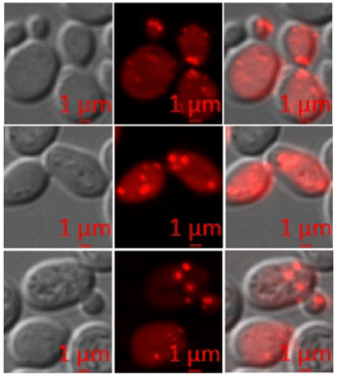
Investigation of the acetic acid stress response in Saccharomyces cerevisiae with mutated H3 residues
Nitu Saha1, Swati Swagatika1 and Raghuvir Singh Tomar1
Yeast cells respond to acetic acid in diverse ways. Here, we have elucidated the deleterious effects of acetic acid on different histone mutants
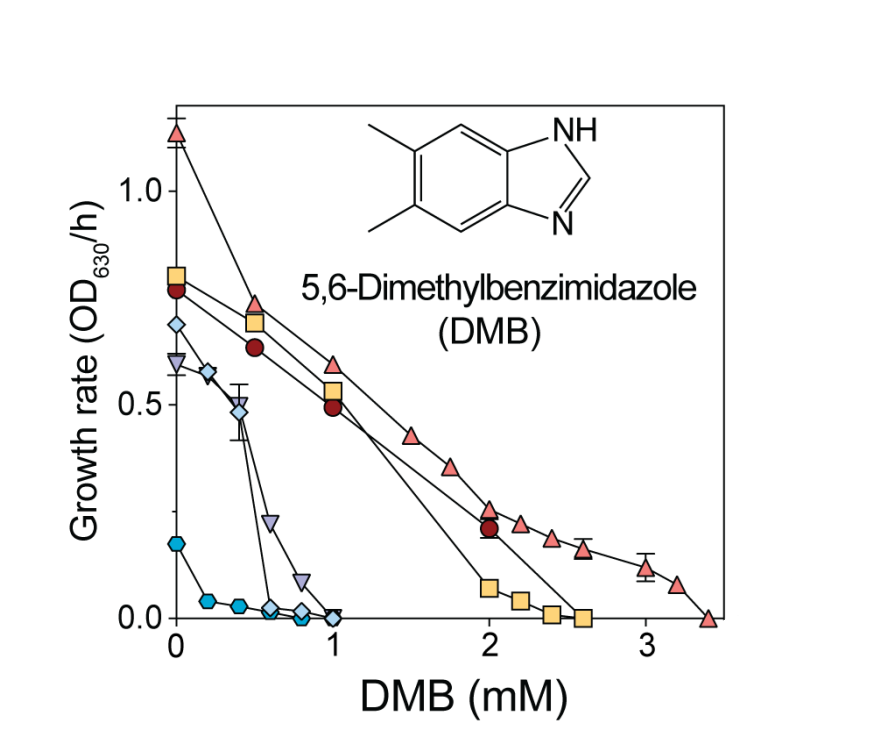
The coenzyme B12 precursor 5,6-dimethylbenzimidazole is a flavin antagonist in Salmonella
Lahiru Malalasekara1 and Jorge C. Escalante-Semerena1,*
Here we investigated why 5,6-dimethylbenzimidazole (DMB) inhibits in S. Typhimurium. Briefly, we determined that the structural similarities of the substituted benzene ring of DMB with the isoalloxazine moiety of flavins is responsible for the deleterious effects of this CoB12 precursor.
GFP fusions of Sec-routed extracellular proteins in Staphylococcus aureus reveal surface-associated coagulase in biofilms
Dominique C. S. Evans1,2,#, Amanda B. Khamas1,#, Lisbeth Marcussen1, Kristian S. Rasmussen3, Janne K. Klitgaard3, Birgitte H. Kallipolitis3, Janni Nielsen1, Daniel E. Otzen1, Mark C. Leake2,4 and Rikke L. Meyer1,5
We show that msfGFP can be used to generate extracellular fluorescent fusion proteins in S. aureus, applicable for proteins that are secreted through the Sec pathway. When fused to coagulase, msfGFP did not hinder the biological function, and the fusion protein localised to the fibrin pseudocapsule surrounding clusters of S. aureus cells.
TL-532, a novel specific Toll-like receptor 3 agonist rationally designed for targeting cancers: discovery process and biological characterization
Sylvain Thierry1, Sarah Maadadi1, Aurore Berton1, Laura Dimier1, Clémence Perret1, Nelly Vey1, Saïd Ourfali2, Mathilde Saccas1, Solène Caron1, Mathilde Boucard-Jourdin1, Marc Colombel3, Bettina Werle1 and Marc Bonnin1
In the present study, we identified a new family of TLR3 agonists that activates myeloid cells, triggers the secretion of pro-inflammatory cytokines in both myeloid and cancer cells, and induces apoptosis specifically in cancer cells.
Acetate modulates the inhibitory effect of Lactobacillus gasseri against the pathogenic yeasts Candida albicans and Candida glabrata
Nuno A. Pedro1,2, Gabriela Fontebasso1,2, Sandra N. Pinto1,2, Marta Alves3 and Nuno P. Mira1,2
The results herein described advance the design of new anti-Candida therapies based on probiotics, in particular, those based on vaginal lactobacilli species, helping to reduce the significant burden that infections caused by Candida have today in human health.

D-Serine reduces the expression of the cytopathic genotoxin colibactin
Jennifer C. Hallam1,#, Sofia Sandalli1,#, Iris Floria1, Natasha C. A. Turner1, Min Tang-Fichaux2, Eric Oswald2,3, Nicky O’Boyle1,4 and Andrew J. Roe1
Sensing and responding to environmental cues and signalling molecules is crucial for bacterial survival. In this study we have identified a D-amino acid that has a strong regulatory effect on the pks genomic island which encodes for biosynthesis genes for the genotoxic compound colibactin.
A modular cloning (MoClo) toolkit for reliable intracellular protein targeting in the yeast Saccharomyces cerevisiae
Pavel Simakin1,#, Christian Koch1,# and Johannes M. Herrmann1
In this study, we describe an advanced Molecular cloning toolkit that is designed for the baker’s yeast Saccharomyces cerevisiae and optimized for the targeting of proteins of interest to specific cellular compartments.
The first taxonomic and functional characterization of human CAVD-associated microbiota
Lavinia Curini1,#, Brunilda Alushi2,#, Mary Roxana Christopher3, Simone Baldi1, Leandro Di Gloria4, Pierluigi Stefano5, Anna Laganà5, Luisa Iannone5, Herko Grubitzsch6, Ulf Landmesser7, Matteo Ramazzotti4, Elena Niccolai1,§, Alexander Lauten2,§ and Amedeo Amedei1,8,§
Calcific aortic valve disease (CAVD) is the most common heart valve disorder, defined by a remodeling multistep process. In this study, we aimed to investigate and characterize the presence of valvular microbiota and the associated immune response in human CAV samples originating from two European populations.
Two distinct and competitive pathways confer the cellcidal actions of artemisinins
January 1, 2015
The biological actions of artemisinin (ART), an antimalarial drug derived from Artemisia annua, remain poorly understood and controversial. This article concludes that ARTs are endowed with two major and distinct types of properties: a potent and specific mitochondria-dependent reaction and a more general and less specific heme-mediated reaction. The competitive nature of these two actions could be explained by their shared source of the consumable ARTs, so that inhibition of the heme-mediated degradation pathway would enable more ARTs to be available for the mitochondrial action. These properties of ARTs can be used to interpret the divergent antimalarial and anticancer actions of ARTs.
Measurement of apoptosis by SCAN©, a system for counting and analysis of fluorescently labelled nuclei
November 26, 2014
This work reports on a system for analyses of apoptosis-like programmed cell death in fungal hyphae that is composed of several modules, which enable automatic quantification of nuclei with chromatin condensation and DNA strand break in large datasets according to nuclei-associated fluorescent markers.
Rewiring yeast acetate metabolism through MPC1 loss of function leads to mitochondrial damage and decreases chronological lifespan
November 18, 2014
This work shows that MPC1-deficient cells make up for their impairment in mitochondrial pyruvate with a metabolic rewiring which involves several intermediates of the mitochondrially localized TCA cycle and the cytosolic glyoxylate shunt but ultimately results in a pro-aging process.
Overexpression of the transcription factor Yap1 modifies intracellular redox conditions and enhances recombinant protein secretion
October 31, 2014
This article investigates the role of Yap1 during the production of recombinant secretory proteins in glucose based growth conditions in Pichia pastoris, and reports a novel role of Yap1 during ER-resident oxidative protein folding.
Functional analysis of lipid metabolism genes in wine yeasts during alcoholic fermentation at low temperature
October 29, 2014
This study confirms the importance of specific genes in growth and fermentation activity of Saccharomyces cerevisiae at low temperature.
Angiotensin II type 1 receptor blockers increase tolerance of cells to copper and cisplatin
October 24, 2014
This study reports the identification of the drug class of Angiotensin II Type 1 receptor blockers (ARBs) and shows that specific ARBs increase yeast tolerance to Cu and Cp, and affect markers of Cu-induced apoptosis. Likewise, this study finds that specific ARBs increase human cell line tolerance to Cu and decrease the prevalence of apoptotic markers.
An extensive endoplasmic reticulum-localised glycoprotein family in trypanosomatids
October 1, 2014
This work describes a novel family of type I membrane proteins ("invariant glycoproteins") and proposes them as trypanosomatid-specific ER-localised glycoproteins, with potential contributions to life cycle progression and immunity, that utilise oligomerisation as an ER retention mechanism.
Time resolved DNA occupancy dynamics during the respiratory oscillation uncover a global reset point in the yeast growth program
September 1, 2014
Using multiple approaches, this work implies a nucleosome focusing event as a key step that resets transcription during the respiratory oscillation.
Cell wall dynamics modulate acetic acid-induced apoptotic cell death of Saccharomyces cerevisiae
August 27, 2014
This work characterizes the involvement of MAPK signaling pathways in cell death induced by acetic acid in Saccharomyces cerevisiae.
Extracellular calcium triggers unique transcriptional programs and modulates staurosporine-induced cell death in Neurospora crassa
August 9, 2014
The results presented here reveal that in Neurospora crassa, extracellular Ca2+ modulates cell death and the transcriptional alterations induced by staurosporine, and lead to the identification of two novel putative Ca2+-binding proteins, encoded by the NCU08524 and NCU06607 genes.