
Research, Research Articles
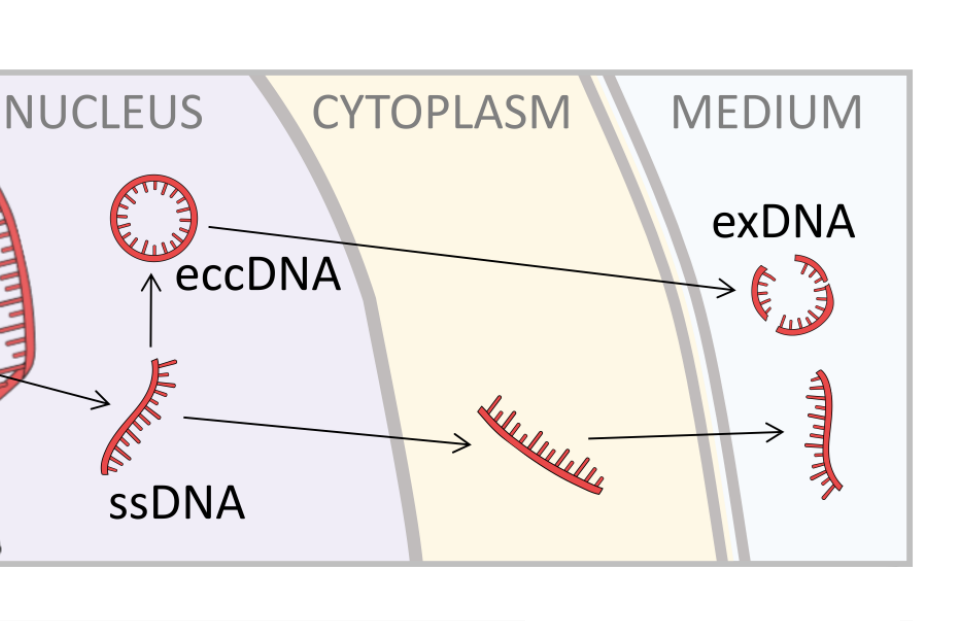
Extracellular DNA secreted in yeast cultures is metabolism-specific and inhibits cell proliferation
Elisabetta de Alteriis1, Guido Incerti2, Fabrizio Cartenì3, Maria Luisa Chiusano3, Chiara Colantuono3, Emanuela Palomba4, Pasquale Termolino4, Francesco Monticolo3,5, Alfonso Esposito3, Giuliano Bonanomi3,6, Rosanna Capparelli3, Marco Iannaccone3,7, Alessandro Foscari2, Carmine Landi8, Palma Parascandola8, Massimo Sanchez9, Valentina Tirelli9, Bruna de Falco3, Virginia Lanzotti3 and Stefano Mazzoleni3,6
Our study demonstrates that extracellular DNA released by living cells can impact the growth rate of Saccharomyces cerevisiae cultures, showing similarities to extrachromosomal circular DNA and leading to cell cycle arrest in the S phase, suggesting potential new functional roles of exDNA.

Basal level of ppGpp coordinates Escherichia coli cell heterogeneity and ampicillin resistance and persistence
Paulina Katarzyna Grucela1 and Yong Everett Zhang1
The universal stringent response alarmone ppGpp (guanosine penta and tetra phosphates) plays a crucial role in various aspects of fundamental cell physiology (e.g., cell growth rate, cell size) and thus bacterial tolerance to and survival of external stresses, including antibiotics. In tihs study, we discuss the fundamental role of basal level of ppGpp in regulating cell homogeneity and ampicillin persistence.
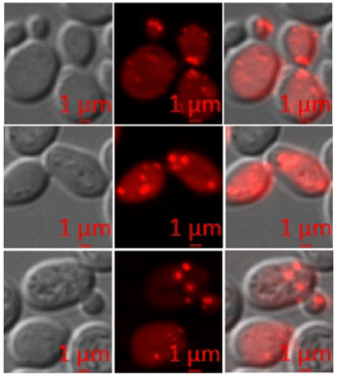
Investigation of the acetic acid stress response in Saccharomyces cerevisiae with mutated H3 residues
Nitu Saha1, Swati Swagatika1 and Raghuvir Singh Tomar1
Yeast cells respond to acetic acid in diverse ways. Here, we have elucidated the deleterious effects of acetic acid on different histone mutants
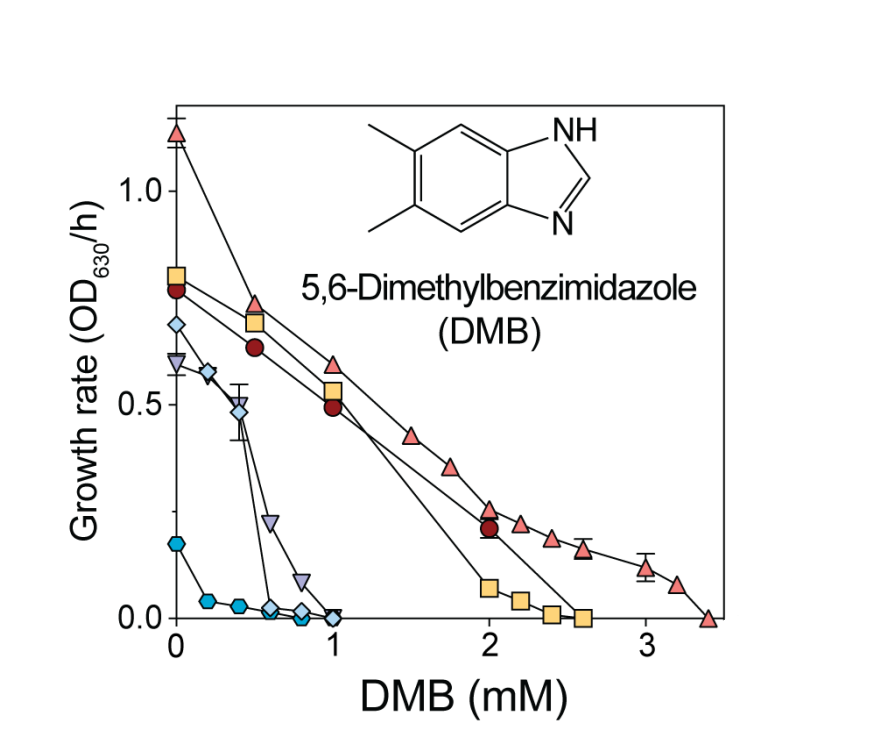
The coenzyme B12 precursor 5,6-dimethylbenzimidazole is a flavin antagonist in Salmonella
Lahiru Malalasekara1 and Jorge C. Escalante-Semerena1,*
Here we investigated why 5,6-dimethylbenzimidazole (DMB) inhibits in S. Typhimurium. Briefly, we determined that the structural similarities of the substituted benzene ring of DMB with the isoalloxazine moiety of flavins is responsible for the deleterious effects of this CoB12 precursor.

Yeast gene KTI13 (alias DPH8) operates in the initiation step of diphthamide synthesis on elongation factor 2
Meike Arend1, Koray Ütkür1, Harmen Hawer1, Klaus Mayer2, Namit Ranjan3, Lorenz Adrian4, Ulrich Brinkmann2 and Raffael Schaffrath1
We show here that apart from its effector role for Elongator-dependent tRNA modification in yeast, Kti13 alias Dph8 also operates in step one of the diphthamide modification pathway.

Caspase 3 exhibits a yeast metacaspase proteostasis function that protects mitochondria from toxic TDP43 aggregates
Steve Brunette1,#, Anupam Sharma1,2,#, Ryan Bell1, Lawrence Puente1 and Lynn A Megeney1,2,3,*
Caspase 3 activation is a hallmark of cell death and there is a strong correlation between elevated protease activity and evolving pathology in neurodegenerative disease, such as amyotrophic lateral sclerosis (ALS). These results suggest that caspase 3 is not inherently pathogenic, but may act as a compensatory proteostasis factor, to limit TDP-43 protein inclusions and protect organelle function in aggregation related degenerative disease.
GFP fusions of Sec-routed extracellular proteins in Staphylococcus aureus reveal surface-associated coagulase in biofilms
Dominique C. S. Evans1,2,#, Amanda B. Khamas1,#, Lisbeth Marcussen1, Kristian S. Rasmussen3, Janne K. Klitgaard3, Birgitte H. Kallipolitis3, Janni Nielsen1, Daniel E. Otzen1, Mark C. Leake2,4 and Rikke L. Meyer1,5
We show that msfGFP can be used to generate extracellular fluorescent fusion proteins in S. aureus, applicable for proteins that are secreted through the Sec pathway. When fused to coagulase, msfGFP did not hinder the biological function, and the fusion protein localised to the fibrin pseudocapsule surrounding clusters of S. aureus cells.
Atg1, a key regulator of autophagy, functions to promote MAPK activation and cell death upon calcium overload in fission yeast
Teruaki Takasaki1, Ryosuke Utsumi1, Erika Shimada1, Asuka Bamba1, Kanako Hagihara2, Ryosuke Satoh1, and Reiko Sugiura1
Here, we provide evidence that the fission yeast Atg1 regulates cell death responses upon intracellular calcium load in addition to its role in promoting Pmk1 MAPK.
VDAC regulates AAC-mediated apoptosis and cytochrome c release in yeast
August 25, 2016
Mitochondrial outer membrane permeabilization is a key event in apoptosis processes leading to the release of lethal factors. In this study, we sought to determine whether Por1p functionally interacts with ADP/ATP carrier (AAC) proteins, as well as its contribution to cytochrome c release and yeast apoptosis induced by acetic acid treatment. Our data indicate that Por1p may regulate cell survival by acting as a negative regulator of AAC proteins in the apoptotic cascade.
Attenuation of polyglutamine-induced toxicity by enhancement of mitochondrial OXPHOS in yeast and fly models of aging
July 26, 2016
Defects in mitochondrial biogenesis and function are common in many neurodegenerative disorders, including Huntington’s disease (HD). We could shown that enhancement of mitochondrial biogenesis protects against neurodegeneration in HD yeast and fly models. Our results suggest that therapeutic interventions aiming at the enhancement of mitochondrial respiration and OXPHOS could reduce polyQ toxicity and delay disease onset.
Cox1 mutation abrogates need for Cox23 in cytochrome c oxidase biogenesis
June 30, 2016
Cox23 is a known conserved assembly factor for cytochrome c oxidase, although its role in cytochrome c oxidase (CcO) biogenesis remains unresolved. To gain additional insights into its role, we isolated spontaneous suppressors of the respiratory growth defect in cox23∆ yeast cells. In this report, we describe the isolation of a robust suppressor of the respiratory defect in cox23∆ cells that mapped to the mitochondrial-encoded Cox1 subunit.
Increased spontaneous recombination in RNase H2-deficient cells arises from multiple contiguous rNMPs and not from single rNMP residues incorporated by DNA polymerase epsilon
May 15, 2016
Ribonucleotides (rNMPs) can become embedded in DNA from insertion by DNA polymerases, failure to remove Okazaki fragment primers, R-loops that can prime replication, and RNA/cDNA-mediated recombination. We report here that recombination is not stimulated by rNMPs incorporated by the replicative polymerase epsilon. Instead, recombination seems to be stimulated by multiple contiguous rNMPs, which may arise from R-loops or replication priming events.
Construction and evaluation of yeast expression networks by database-guided predictions
May 10, 2016
DNA-Microarrays are powerful tools to obtain expression data on the genome-wide scale. We set out to define a way to cluster microarray data according to their expressional relationship and to obtain information on the significance of this clustering approach.
Optogenetic monitoring identifies phosphatidylthreonine-regulated calcium homeostasis in Toxoplasma gondii
May 1, 2016
Toxoplasma gondii is an obligate intracellular parasite, which inflicts acute as well as chronic infections in a wide range of warm-blooded vertebrates. Using an optogenetic sensor to monitor subcellular calcium in this model intracellular pathogen we found a novel regulatory function of phosphatidylthreonine in calcium signaling.
Filamentation protects Candida albicans from amphotericin B-induced programmed cell death via a mechanism involving the yeast metacaspase, MCA1
April 25, 2016
Candida albicans proliferates in two distinct cell types: blastopores and filaments. Programmed cell death is a controlled form of cell suicide that occurs when C. albicans cells are exposed to fungicidal drugs like amphotericin B and caspofungin, and to other stressful conditions. We provide evidence that programmed cell death is cell-type specific in yeast: Filamentous C. albicans cells are more resistant to amphotericin B- and caspofungin-induced programmed cell death than their blastospore counterparts. Our genetic data suggest that this phenomenon is mediated by a protective mechanism involving the yeast metacaspase, MCA1.
Formaldehyde fixation is detrimental to actin cables in glucose-depleted S. cerevisiae cells
April 13, 2016
Actin filaments form cortical patches and emanating cables in fermenting cells of Saccharomyces cerevisiae. We assume that stability of actin cables reflects the metabolic status of the cell. Based on comparison of live and formaldehyde-fixed cells, our data suggest that formaldehyde affects respiration before fixation and this uneven signaling results in destabilization of actin cables in glucose-deprived cells.
Insights into dynamin-associated disorders through analysis of equivalent mutations in the yeast dynamin Vps1
March 22, 2016
The dynamins represent a superfamily of proteins that have been shown to function in a wide range of membrane fusion and fission events. An increasing number of mutations in the human classical dynamins, Dyn-1 and Dyn-2 has been reported, with diseases caused by these changes ranging from Charcot-Marie-Tooth disorder to epileptic encephalopathies. This study aimed to use the dynamin-like protein Vps1 of Saccharomyces cerevisiae as a model to gain insights into the mechanistic defects caused by specific dynamin mutations considered to underlie a number of diseases.
Genomic saturation mutagenesis and polygenic analysis identify novel yeast genes affecting ethyl acetate production, a non-selectable polygenic trait
March 18, 2016
Isolation of mutants in populations of microorganisms has been a valuable tool in experimental genetics for decades. The main disadvantage, however, is the inability of isolating mutants in non-selectable polygenic traits. Our study shows that genomic saturation mutagenesis combined with complex trait polygenic analysis could be used successfully to identify causative alleles underlying many non-selectable, polygenic traits in small collections of haploid strains with multiple induced mutations.