
Research, Research Reports

Promoter methylation and increased expression of PD-L1 in patients with active tuberculosis
Yen-Han Tseng1,2, Sheng-Wei Pan1,2,3, Jhong-Ru Huang2,4, Chang-Ching Lee1, Jung-Jyh Hung2,5, Po-Kuei Hsu2,5, Nien-Jung Chen6, Wei-Juin Su2,7, Yuh-Min Chen1,2 and Jia-Yih Feng1,2,8
The PD-1/PD-L1 pathway plays a pivotal role in T cell activity and is involved in the pathophysiology of tuberculosis. Here we show that PD-L1 expression is increased in patients with active tuberculosis and is correlated with treatment outcomes.

Quantification methods of Candida albicans are independent irrespective of fungal morphology
Amanda B Soares1, Maria C de Albuquerque1, Leticia M Rosa1, Marlise I Klein 2, Ana C Paravina1, Paula A Barbugli1, Livia N Dovigo3 and Ewerton G de O Mima1
Our study demonstrated that the quantification methods of C. albicans (cells/mL, CFU/mL, and vPCR) did not agree, regardless of the fungal morphology/growth, even though a significant and strong correlation is observed.

Pathogenic Escherichia coli change the adhesion between neutrophils and endotheliocytes in the experimental bacteremia model
Svetlana N Pleskova1,2,*, Nikolay A Bezrukov1, Sergey Z Bobyk1, Ekaterina N Gorshkova1 and Dimitri V Novikov3
In this work, we have demonstrated that in the model of experimental septicemia there is a disruption of adhesion contacts between neutrophils and endothelial cells, manifested by a decrease in adhesion force and work upon exposure to E. coli.

Arsenite treatment induces Hsp90 aggregates distinct from conventional stress granules in fission yeast
Naofumi Tomimotoa, Teruaki Takasakia and Reiko Sugiura
Given the conserved role of Hsp90 as a molecular chaperone protein, our findings presented in this study may suggest a novel type of arsenite-induced biological condensates, wherein Hsp90 plays a key role in maintaining its integrity.

Unresolved mystery of cyclic nucleotide second messengers, periplasmic acid phosphatases and bacterial natural competence
Kristina Kronborg and Yong Everett Zhang
In this study we aimed to identify the promotors responsible for the expression of the non-specific acid phosphatase AphA during different starvation conditions, to confirm the requirement of the cAMP-dependent CRP regulon for aphA expression, and to finally identify regulators of its expression.

Expansion of metabolically labelled endocytic organelles and cytoskeletal cell structures in Giardia lamblia using optimised U- ExM protocols
Clirim Jetishi1,2,a, Erina A. Balmer1,2,a, Bianca M. Berger1,2,a, Carmen Faso1,3,4 and Torsten Ochsenreiter1
Understanding cellular ultrastructure is tightly bound to microscopic resolution and the ability to identify individual components at that resolution. In this study we demonstrate mostly isotropic 4.5-fold expansion of several different compartments in Giardia cells and present an optimised, shortened, and modular protocol that can be swiftly adjusted to the investigators needs.

Polyadenylated versions of small non-coding RNAs in Saccharomyces cerevisiae are degraded by Rrp6p/Rrp47p independent of the core nuclear exosome
Anusha Chaudhuri1,#, Soumita Paul2,#, Mayukh Banerjea2 and Biswadip Das2
In this investigation, we unveiled a novel functional role of the major nuclear 3′→5′ exoribonuclease, Rrp6p, and its cofactor Rrp47p in the degradation of polyadenylated versions of several mature sncRNAs, including 5S, 5.8S rRNAs, all sn- and some select snoRNAs in the baker’s yeast S. cerevisiae.
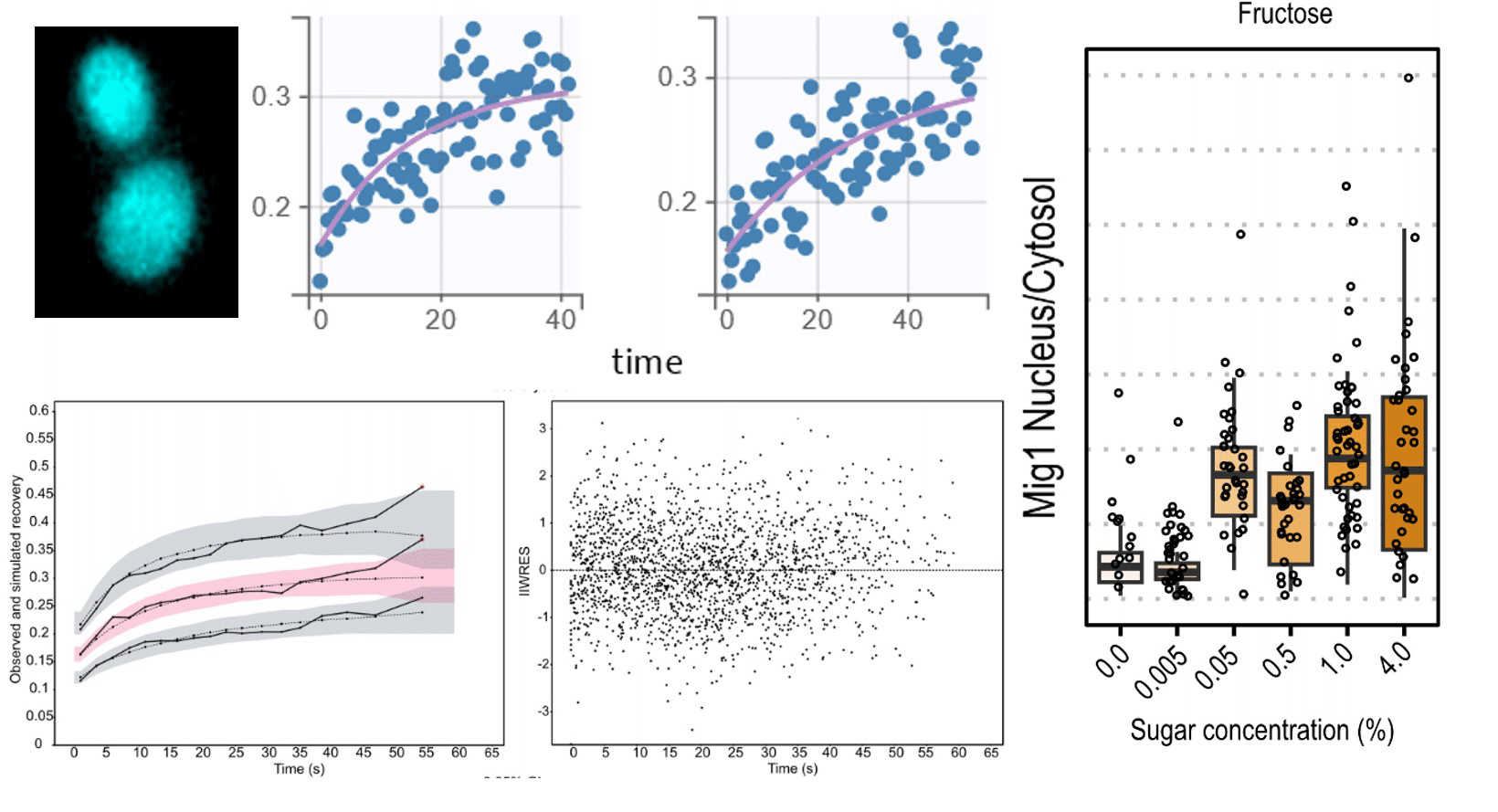
Exploring carbon source related localization and phosphorylation in the Snf1/Mig1 network using population and single cell-based approaches
Svenja Braam1, Farida Tripodi2, Linnea Österberg1,3, Sebastian Persson1, Niek Welkenhuysen1, Paola Coccetti2 and Marija Cvijovic1
In this work we set out to explore the relationship between the subcellular localization and regulation of kinases in the context of carbon source signaling. The data presented in this paper reinforce the notion that not only the activation/inactivation of kinases but also their subcellular localization and that of their targets influence fate decisions in response to environmental changes.

A Modular Cloning Toolkit for the production of recombinant proteins in Leishmania tarentolae
Katrin Hieronimus1,2,#, Tabea Donauer1,2,#, Jonas Klein1,#, Bastian Hinkel1,#, Julia Vanessa Spänle1,#, Anna Probst1,#, Justus Niemeyer1,#, Salina Kibrom1, Anna Maria Kiefer1, Luzia Schneider2, Britta Husemann2, Eileen Bischoff2, Sophie Möhring2, Nicolas Bayer1, Dorothée Klein1, Adrian Engels1, Benjamin Gustav Ziehmer2, Julian Stieß3, Pavlo Moroka1, Michael Schroda1, and Marcel Deponte2
Modular Cloning (MoClo) is based on libraries of standardized genetic parts that can be directionally assembled via Golden Gate cloning in one-pot reactions into transcription units and multigene constructs. We established a MoClo toolkit and exemplified its application for the production of recombinant proteins in L. tarentolae.
Systematic analysis of nuclear gene function in respiratory growth and expression of the mitochondrial genome in S. cerevisiae
June 30, 2020
Using yeast Saccharomyces cerevisiae, the authors identified 254 nuclear genes essential for respiratory growth and 12 required for viability without mtDNA. They also found 176 genes involved in mitochondrial protein synthesis and mtDNA maintenance, offering a comprehensive view of the processes supporting oxidative phosphorylation.
Histone H3E73Q and H4E53A mutations cause recombinogenic DNA damage
April 24, 2020
This study reveals that conserved residues H3E73 and H4E53 in histones H3 and H4 play a crucial role in maintaining genome stability. Mutations at these sites increase recombinogenic DNA damage, likely due to replication-associated issues rather than transcriptional activity, highlighting their importance in DNA damage prevention and repair.
Sulforaphane alters the acidification of the yeast vacuole
March 20, 2020
This study identifies vacuolar pH regulation as a key factor in sulforaphane (SFN) sensitivity, showing that SFN-induced cell death in yeast - and potentially in human cancer cells - is linked to its ability to raise vacuolar or lysosomal pH.
Broad-spectrum antifungal activities and mechanism of drimane sesquiterpenoids
March 12, 2020
This study identifies (-)-drimenol as a potent broad-spectrum antifungal agent effective against multiple pathogenic fungi, including drug-resistant strains, and reveals its mechanism of action involves disruption of fungal membranes and targeting Crk1-related pathways, with potential for structural optimization to enhance efficacy.
Stable and destabilized GFP reporters to monitor calcineurin activity in Saccharomyces cerevisiae
February 5, 2020
This study introduces GFP-based transcriptional reporters driven by a calcineurin-dependent response element, enabling real-time monitoring of calcineurin activity in live yeast cells for studying stress responses, aging, and antifungal drug screening.
The euchromatic histone mark H3K36me3 preserves heterochromatin through sequestration of an acetyltransferase complex in fission yeast
January 3, 2020
This study reveals that the loss of heterochromatin silencing in Set2-deficient cells is due to unrestrained Mst2C activity, highlighting the need for spatially restricted chromatin-modifying enzymes to maintain distinct chromatin states.
Depletion of SNAP-23 and Syntaxin 4 alters lipid droplet homeostasis during Chlamydia infection
December 3, 2019
This study reveals that the plasma membrane SNARE proteins SNAP-23 and Syntaxin 4 are crucial for Chlamydia trachomatis development by regulating lipid droplet homeostasis and supporting the formation of infectious progeny within host cells.
Yeast can express and assemble bacterial secretins in the mitochondrial outer membrane
November 19, 2019
Secretins, essential components of bacterial secretion systems, can be expressed in yeast and show differential dependencies on mitochondrial import and assembly factors for membrane integration, suggesting diverse pathways for their assembly into the bacterial outer membrane.
Metabolic reprogramming of Salmonella infected macrophages and its modulation by iron availability and the mTOR pathway
November 14, 2019
This article shows that iron plays a critical role in both the immune response and metabolic reprogramming of macrophages during infection, influencing the TCA cycle and mTOR pathway, with implications for the growth of intracellular bacteria like Salmonella.