
Vol. 10, 2023
GFP fusions of Sec-routed extracellular proteins in Staphylococcus aureus reveal surface-associated coagulase in biofilms
Dominique C. S. Evans1,2,#, Amanda B. Khamas1,#, Lisbeth Marcussen1, Kristian S. Rasmussen3, Janne K. Klitgaard3, Birgitte H. Kallipolitis3, Janni Nielsen1, Daniel E. Otzen1, Mark C. Leake2,4 and Rikke L. Meyer1,5
We show that msfGFP can be used to generate extracellular fluorescent fusion proteins in S. aureus, applicable for proteins that are secreted through the Sec pathway. When fused to coagulase, msfGFP did not hinder the biological function, and the fusion protein localised to the fibrin pseudocapsule surrounding clusters of S. aureus cells.
Atg1, a key regulator of autophagy, functions to promote MAPK activation and cell death upon calcium overload in fission yeast
Teruaki Takasaki1, Ryosuke Utsumi1, Erika Shimada1, Asuka Bamba1, Kanako Hagihara2, Ryosuke Satoh1, and Reiko Sugiura1
Here, we provide evidence that the fission yeast Atg1 regulates cell death responses upon intracellular calcium load in addition to its role in promoting Pmk1 MAPK.
TL-532, a novel specific Toll-like receptor 3 agonist rationally designed for targeting cancers: discovery process and biological characterization
Sylvain Thierry1, Sarah Maadadi1, Aurore Berton1, Laura Dimier1, Clémence Perret1, Nelly Vey1, Saïd Ourfali2, Mathilde Saccas1, Solène Caron1, Mathilde Boucard-Jourdin1, Marc Colombel3, Bettina Werle1 and Marc Bonnin1
In the present study, we identified a new family of TLR3 agonists that activates myeloid cells, triggers the secretion of pro-inflammatory cytokines in both myeloid and cancer cells, and induces apoptosis specifically in cancer cells.

Infinity war: Trichomonas vaginalis and interactions with host immune response
Giulia Bongiorni Galego1 and Tiana Tasca1
Trichomonas vaginalis is the pathological agent of human trichomoniasis with an incidence of 156 million cases worldwide. This review highlights parasite strategies to activate and stimulate or evade variated and complex immunological mechanisms related to the symptoms and clinical complications observed here.
Acetate modulates the inhibitory effect of Lactobacillus gasseri against the pathogenic yeasts Candida albicans and Candida glabrata
Nuno A. Pedro1,2, Gabriela Fontebasso1,2, Sandra N. Pinto1,2, Marta Alves3 and Nuno P. Mira1,2
The results herein described advance the design of new anti-Candida therapies based on probiotics, in particular, those based on vaginal lactobacilli species, helping to reduce the significant burden that infections caused by Candida have today in human health.

D-Serine reduces the expression of the cytopathic genotoxin colibactin
Jennifer C. Hallam1,#, Sofia Sandalli1,#, Iris Floria1, Natasha C. A. Turner1, Min Tang-Fichaux2, Eric Oswald2,3, Nicky O’Boyle1,4 and Andrew J. Roe1
Sensing and responding to environmental cues and signalling molecules is crucial for bacterial survival. In this study we have identified a D-amino acid that has a strong regulatory effect on the pks genomic island which encodes for biosynthesis genes for the genotoxic compound colibactin.
A modular cloning (MoClo) toolkit for reliable intracellular protein targeting in the yeast Saccharomyces cerevisiae
Pavel Simakin1,#, Christian Koch1,# and Johannes M. Herrmann1
In this study, we describe an advanced Molecular cloning toolkit that is designed for the baker’s yeast Saccharomyces cerevisiae and optimized for the targeting of proteins of interest to specific cellular compartments.

The metabolites of lactic acid bacteria: classification, biosynthesis and modulation of gut microbiota
Huang Tang1,2, Wanqiu Huang1,2 and Yu-Feng Yao1,2,3,4,5
Lactic acid bacteria (LAB) are ubiquitous microorganisms that can colonize the intestine and participate in the physiological metabolism of the host. In this review, we summarize the metabolites of LAB and their influence on the intestine as well as the underlying regulatory mechanisms and their impact on human health.
The first taxonomic and functional characterization of human CAVD-associated microbiota
Lavinia Curini1,#, Brunilda Alushi2,#, Mary Roxana Christopher3, Simone Baldi1, Leandro Di Gloria4, Pierluigi Stefano5, Anna Laganà5, Luisa Iannone5, Herko Grubitzsch6, Ulf Landmesser7, Matteo Ramazzotti4, Elena Niccolai1,§, Alexander Lauten2,§ and Amedeo Amedei1,8,§
Calcific aortic valve disease (CAVD) is the most common heart valve disorder, defined by a remodeling multistep process. In this study, we aimed to investigate and characterize the presence of valvular microbiota and the associated immune response in human CAV samples originating from two European populations.

Cellular cholesterol licenses Legionella pneumophila intracellular replication in macrophages
Edna Ondari1,#, Ashley Wilkins1,#, Brian Latimer3, Ana-Maria Dragoi2,3 and Stanimir S. Ivanov1
Host membranes are inherently critical for niche homeostasis of vacuolar pathogens such as Legionella. One membrane component that is often subverted by vacuolar bacteria is cholesterol. We provide experimental evidence that cellular cholesterol promotes L. pneumophila replication within a membrane bound organelle in infected macrophages.

Phospholipases A and Lysophospholipases in protozoan parasites
Perrine Hervé1, Sarah Monic1, Frédéric Bringaud1 and Loïc Rivière1
In this review, we summarize the literature on phospholipases and lysophospholipases in several protozoan parasites of medical relevance, and discuss the growing interest for them as potential drug and vaccine targets.
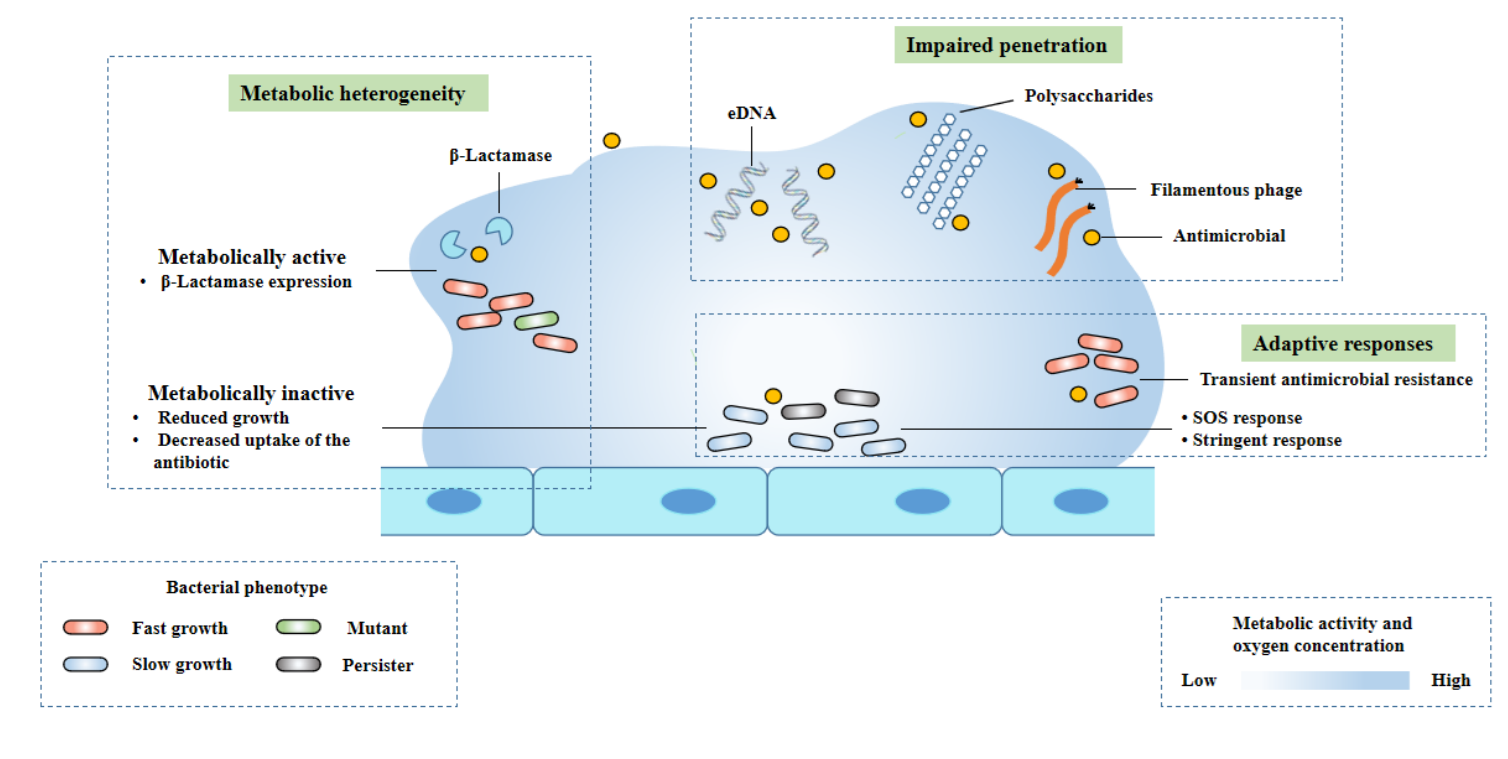
Biofilm tolerance, resistance and infections increasing threat of public health
Shanshan Yang1,3, Xinfei Li1,2, Weihe Cang1,2, Delun Mu1,3, Shuaiqi Ji1,3, Yuejia An1, Rina Wu1,2,3 and Junrui Wu1,2,3
The review explores the role of biofilms in the development of bacterial resistance mechanisms and proposed therapeutic intervention strategies for biofilm related diseases.
Infinity war: Trichomonas vaginalis and interactions with host immune response
Giulia Bongiorni Galego1 and Tiana Tasca1
Trichomonas vaginalis is the pathological agent of human trichomoniasis with an incidence of 156 million cases worldwide. This review highlights parasite strategies to activate and stimulate or evade variated and complex immunological mechanisms related to the symptoms and clinical complications observed here.
The metabolites of lactic acid bacteria: classification, biosynthesis and modulation of gut microbiota
Huang Tang1,2, Wanqiu Huang1,2 and Yu-Feng Yao1,2,3,4,5
Lactic acid bacteria (LAB) are ubiquitous microorganisms that can colonize the intestine and participate in the physiological metabolism of the host. In this review, we summarize the metabolites of LAB and their influence on the intestine as well as the underlying regulatory mechanisms and their impact on human health.
Ribose 5-phosphate: the key metabolite bridging the metabolisms of nucleotides and amino acids during stringent response in Escherichia coli?
Paulina Katarzyna Grucela1, Tobias Fuhrer2, Uwe Sauer2, Yanjie Chao3 and Yong Everett Zhang1
Here we propose the metabolite ribose 5’-phosphate as the key link between nucleotide and amino acid metabolisms and a working model integrating both the transcriptional and metabolic effects of (p)ppGpp on E. coli physiological adaptation during the stringent response.
GFP fusions of Sec-routed extracellular proteins in Staphylococcus aureus reveal surface-associated coagulase in biofilms
June 28, 2023
We show that msfGFP can be used to generate extracellular fluorescent fusion proteins in S. aureus, applicable for proteins that are secreted through the Sec pathway. When fused to coagulase, msfGFP did not hinder the biological function, and the fusion protein localised to the fibrin pseudocapsule surrounding clusters of S. aureus cells.
Ribose 5-phosphate: the key metabolite bridging the metabolisms of nucleotides and amino acids during stringent response in Escherichia coli?
June 1, 2023
Here we propose the metabolite ribose 5’-phosphate as the key link between nucleotide and amino acid metabolisms and a working model integrating both the transcriptional and metabolic effects of (p)ppGpp on E. coli physiological adaptation during the stringent response.
Atg1, a key regulator of autophagy, functions to promote MAPK activation and cell death upon calcium overload in fission yeast
May 10, 2023
Here, we provide evidence that the fission yeast Atg1 regulates cell death responses upon intracellular calcium load in addition to its role in promoting Pmk1 MAPK.
TL-532, a novel specific Toll-like receptor 3 agonist rationally designed for targeting cancers: discovery process and biological characterization
April 19, 2023
In the present study, we identified a new family of TLR3 agonists that activates myeloid cells, triggers the secretion of pro-inflammatory cytokines in both myeloid and cancer cells, and induces apoptosis specifically in cancer cells.
Infinity war: Trichomonas vaginalis and interactions with host immune response
March 31, 2023
Trichomonas vaginalis is the pathological agent of human trichomoniasis with an incidence of 156 million cases worldwide. This review highlights parasite strategies to activate and stimulate or evade variated and complex immunological mechanisms related to the symptoms and clinical complications observed here.
Acetate modulates the inhibitory effect of Lactobacillus gasseri against the pathogenic yeasts Candida albicans and Candida glabrata
March 21, 2023
The results herein described advance the design of new anti-Candida therapies based on probiotics, in particular, those based on vaginal lactobacilli species, helping to reduce the significant burden that infections caused by Candida have today in human health.
D-Serine reduces the expression of the cytopathic genotoxin colibactin
March 8, 2023
Sensing and responding to environmental cues and signalling molecules is crucial for bacterial survival. In this study we have identified a D-amino acid that has a strong regulatory effect on the pks genomic island which encodes for biosynthesis genes for the genotoxic compound colibactin.
A modular cloning (MoClo) toolkit for reliable intracellular protein targeting in the yeast Saccharomyces cerevisiae
February 28, 2023
In this study, we describe an advanced Molecular cloning toolkit that is designed for the baker’s yeast Saccharomyces cerevisiae and optimized for the targeting of proteins of interest to specific cellular compartments.
Ribose 5-phosphate: the key metabolite bridging the metabolisms of nucleotides and amino acids during stringent response in Escherichia coli?
Paulina Katarzyna Grucela1, Tobias Fuhrer2, Uwe Sauer2, Yanjie Chao3 and Yong Everett Zhang1
Here we propose the metabolite ribose 5’-phosphate as the key link between nucleotide and amino acid metabolisms and a working model integrating both the transcriptional and metabolic effects of (p)ppGpp on E. coli physiological adaptation during the stringent response.